ruth901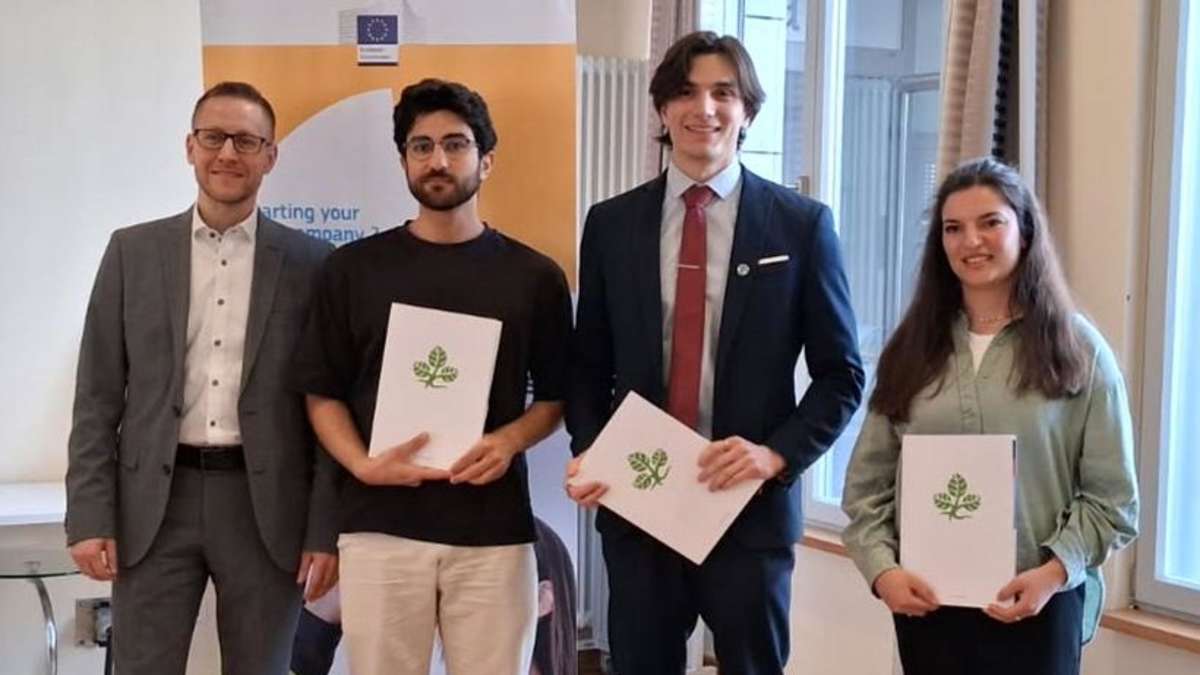

In the ideas competition at Fulda University, students won with creative concepts. Including a game in which young people don't even notice that they are learning something.
Fulda – playing instead of cramming – Diego Lenero convinced the jury at this year’s ideas competition at Fulda University with this concept. The student from the Applied Computer Science department secured the first prize worth 1,000 euros with his educational game company “Magigam”.
The idea behind it: players should have so much fun that the educational background is not even noticeable. Instead of reading explanatory texts or answering quiz questions, users try things out, make decisions and directly experience the consequences. Learning happens incidentally – through experiencing cause and effect.
Student wins university competition with imaginative learning game
With his company, Lenero wants to translate real scientific, philosophical and social systems into game rules. The award winner sees this as an answer to a social risk: young people are growing up in a media environment that is flooded with stimuli, while the challenges are becoming increasingly complex. Classic forms of communication could no longer keep up with perfectly optimized entertainment media. “Those who do not intuitively understand complex systems are vulnerable to oversimplification, disinformation and manipulation,” he said.
His first product “FROGS” is based on biology and evolution. The players have to survive for generations and learn how natural selection and ecological relationships work. FROGS is designed as a test version to check how well the “Magigam principle” works. Topics such as physics, ethics, power and responsibility or social justice are not yet present in this version, according to a statement from Fulda University. Initial tests with players showed high motivation and a clear understanding of the system. An accompanying scientific study is now examining whether the game creates a measurable understanding of evolution in twelve-year-olds.
Mirjam Hunger from the Department of Ecotrophology took second place. With “NutriMelt,” the bachelor’s graduate wants to offer patients with malnutrition or swallowing problems a high-calorie ice cream confection with a chocolate coating. The product is intended to lead to greater acceptance than conventional drinking food, particularly among older and multimorbid people. She received 750 euros in prize money for her idea – and also the audience prize in form a sightseeing flight over the Wasserkuppe.
Students shine with smart start-up ideas
“NutriMelt” combines medical and psychosocial benefits: It increases energy and nutrient intake, prevents nutritional deficiencies and supports wound healing and mobility. The idea creator sees the target group as, among others, two to three million malnourished hospital patients every year as well as people who live in nursing homes and rehabilitation facilities.
The third prize, worth 500 euros, went to master's student Enis Ciftci from the Department of Health Sciences. His “RevivaVino” is aimed at health-conscious adults who appreciate wine but want to reduce the typical side effects of alcohol consumption. The electrolyte-enriched mixed wine drink is intended to support fluid balance while drinking through a combination of wine, water, lemonade and minerals.
A total of six teams presented their ideas at the award ceremony in the Fulda Transfer University Center. These also included an AI-supported language learning dashboard, a concept for circular food production and a smart solution for intelligent storage in private households. Fulda University organizes the ideas competition once a year to encourage students to think about starting a business.
Just recently Fulda University also welcomed new first-year students. In total there are around 550 new students, and around half of the first semester students come from abroad.