ruth901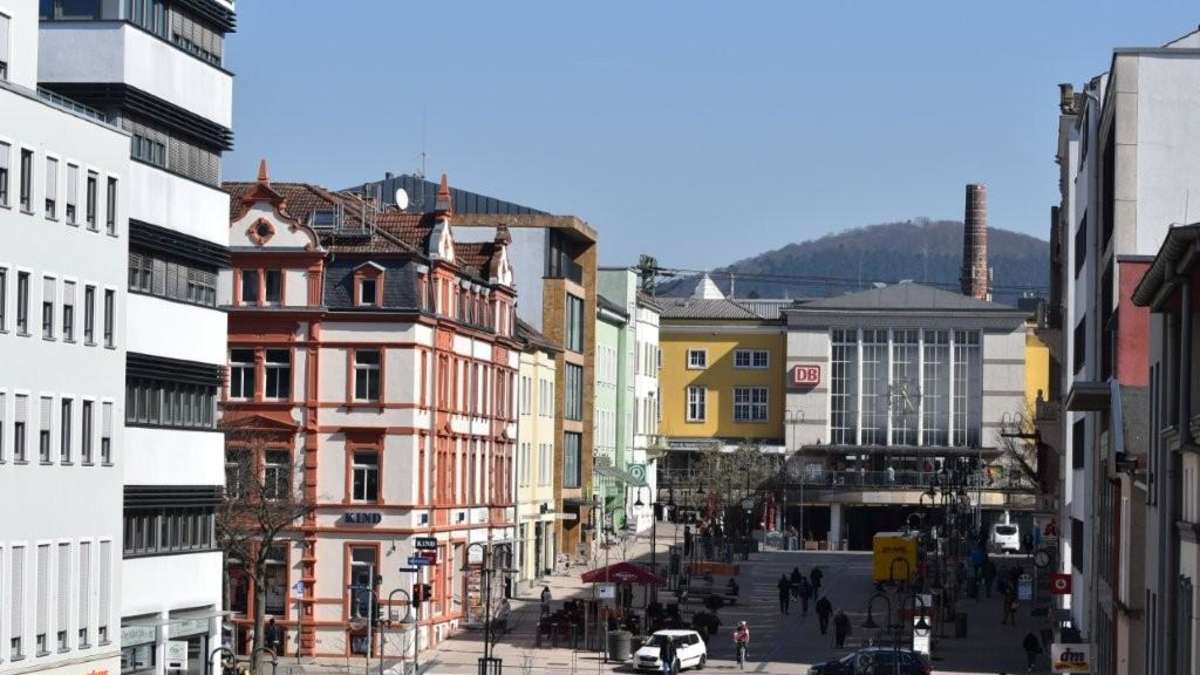

What should the Fulda train station district look like in the future? Citizens, planners and city administration discussed this. With acceptance into the urban development funding program, the development of a future concept begins.
Fulda – “Bike paths to school”, “Large trees are missing”, “Weekly market on the station forecourt” or “Toilet for the station mission” – the ideas were collected on colorful sticky notes on Tuesday (June 2nd). Around 50 citizens discussed in the Old University on partition walls, marked important topics and exchanged suggestions. The first citizens' meeting on the future of the station district has already produced numerous concrete suggestions.
Citizens discuss the future of the Fulda train station district
Since December 2025 The district is part of the urban development funding program “Growth and Sustainable Renewal” of the state of Hesse. Together with a planning team, the city has now started the participation process for an integrated urban development concept (ISEK). The aim is to identify challenges and develop guidelines and measures. The approximately 61 hectare funding area extends from the train station to the old town and includes the Wilhelminian style quarter along the tracks to Petersberger Straße and the area to the castle gardens.
“We tried to be included in the program because we see great potential here,” explained Roman Bonzel from the urban development funding agency. The projects are to be implemented gradually over the next ten years. The city is supported by the Berlin urban planning office yellow Z and the Hamburg office ARGUS Stadt und Verkehr. Both offices had already gotten an impression of the area during a tour. Numerous strengths, but also weak points, became clear.

Oliver Bormann from yellow Z described the district as a district in transition. The central question is how the district can remain operational in the next 10 to 15 years – for example with regard to housing, retail, leisure activities and the adaptation of public spaces to new challenges.
For example, he saw a need for action on the issue of climate. Heavy rain, which flooded the district in some places, and increasing summer heat made it clear that more green spaces and shade were needed. He highlighted the green space in front of the Christ Church as particularly valuable, which is already being actively used for many events but still offers potential.
The desire for more green ran like a common thread through the event. However, this is not always easy to implement. Parks department manager Florian Ridder pointed out that there are numerous cables underground.
Urgent need for action for the ZOB
The quality of stay also played a central role. Bahnhofstrasse is one of the most frequented streets in the city. “It’s buzzing,” said Bormann. But it also has to actually invite you to linger. Bormann positively assessed the “totally exciting Karl Kaufhaus project” as well as the architectural diversity of the district with its Wilhelminian style houses.
The planners see a need for improvement, among other things, in the station forecourt. Although it performs well compared to many large cities, it is often perceived as unattractive or unsafe.
Reginald Bukel, chairman of the BID Bahnhofstrasse association, emphasized the importance of the street as one of the most important entrances to the city. Anyone who arrives in Fulda gets their first impression here. In view of online retail and competition from shopping centers, the city center will have to focus more on quality of stay, restaurants and attractive public spaces in the future.

Another focus was mobility. Martin Randelhoff from ARGUS pointed out the diverse requirements in the station environment. There is a need for action, especially at the central bus station. “The current one is no longer sustainable in the long term,” he said. A corresponding planning process is already underway. It is also about better bicycle parking options, safe paths for cyclists and pedestrians and better orientation throughout the station area.
Bonzel also emphasized the role of the train station as a mobility hub. In the future, a train station will have to be more than just a place to change trains. Local supplies, services and quality of stay could become more important. At the same time, space must be created for all forms of transport. This will require redistributing existing areas.
The city is planning further participation formats in the coming months. In addition, “local partnerships” should be created in which citizens, associations, institutions and other actors can accompany and help shape the development of the district.