ruth901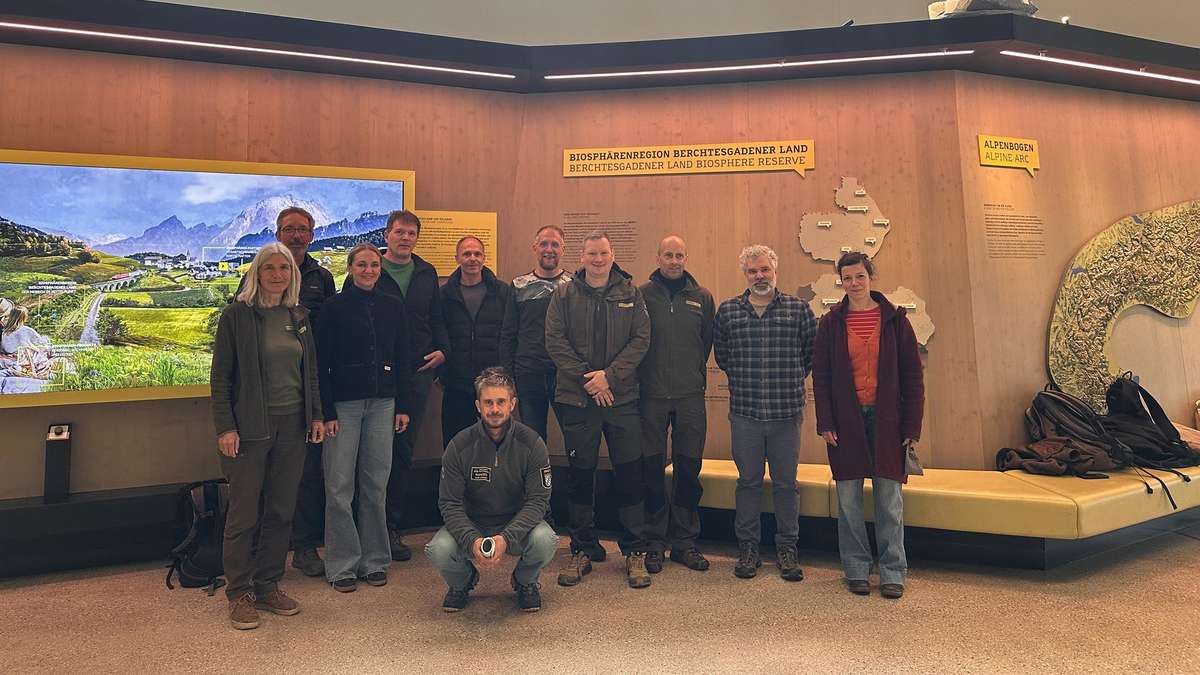

Experts from the Rhön visited the Berchtesgaden National Park. During the specialist excursion lasting several days, experiences were shared and impulses were collected.
Berchtesgaden/Rhön – Representatives of the Bavarian Rhön Nature Park and Biosphere Reserve went on a specialist excursion to Berchtesgaden together with the Lower Nature Conservation Authority of Bad Kissingen. The focus of the exchange with Germany's only Alpine national park was innovative approaches to nature conservation and visitor management.
Rhön delegation visits Berchtesgaden National Park
Under the motto “Let nature be nature”, the Berchtesgaden National Park protects natural processes over 210 square kilometers. For the Rhön delegation, the main focus was on monitoring golden eagles and the international project to reintroduce bearded vultures.
A central topic for the Rhön, which is also a popular tourist destination, was digital route coordination. In conversation with a specialized digital ranger, the participants found out about innovative methods for controlling visitor flows and using hiking trails sustainably. The balancing act between forest protection and wild animals was also discussed – for example when visiting a 45-hectare winter enclosure for red deer.
Explore the Rhön via app
With the official app “Rhön Biosphere Reserve” The transnational UNESCO biosphere reserve can be discovered conveniently and digitally. A 3D map offers tour and excursion tips, and a routing tool records hiking and cycling routes. The app provides valuable information about Rhön nature, behavioral tips and a “virtual panorama” for an all-round view – also available in offline mode. The free and ad-free app is available for iPhones and Android devices in the app stores.
The trip concluded with a visit to the “Haus der Berge”. The education center is an example of how complex nature conservation topics can be clearly communicated. “Looking outside the box is crucial in order to develop new solutions,” explains a participant in the excursion. The specialist exchange illustrates the great importance of networking between protected areas.