ruth901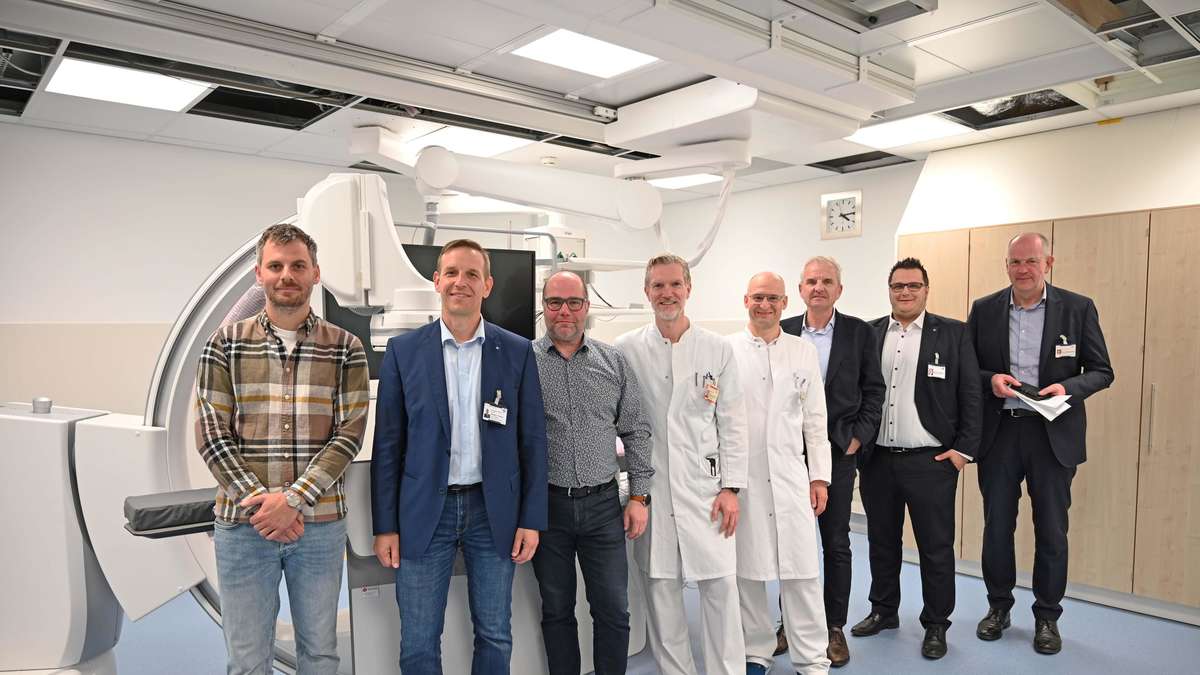

With an investment of 5.5 million euros, the Fulda Clinic has comprehensively modernized and upgraded its cardiology department.
Fulda – The Fulda Clinic has completed a large-scale modernization project with the commissioning of three technologically leading cardiac catheter laboratories. The investment totaling around 5.5 million euros includes two million euros for medical technology and 3.5 million euros for the structural infrastructure, as the clinic announced.
Fulda Hospital is upgrading cardiology with an investment of millions
According to the clinic, a new functional complex has been created on an area of 950 square meters that combines state-of-the-art medical technology with a highly efficient infrastructure. The cardiac catheter laboratories are located in direct vertical and horizontal connection to the central emergency room and the intensive care unit in order to minimize transport routes and ensure time-critical 24/7 intervention in acute coronary syndromes.
At the center of the new system are three digital angiography systems with integrated pressure wire measurement, which use sensors in the vessel to objectively record whether a narrowing restricts the blood flow to the heart muscle in a clinically relevant manner. In addition, intravascular imaging methods such as intravascular ultrasound (IVUS) and in particular optical coherence tomography (OCT) enable a high-resolution assessment of the vessel wall; A new artificial intelligence process supports the analysis and overlays the OCT images with the images from the X-ray system.
“These technologies allow us to achieve precision medicine for our patients that was previously unimaginable, in which we not only better understand the morphology and functional significance of narrowings, but can also plan treatment with stents more precisely and predictably,” explains Prof. Dr. Volker Schächinger, Director of the Medical Clinic I (Cardiology) of the Cardiothoracic Center.
3D technology and fewer X-rays
Another focus is the treatment of complex cardiac arrhythmias: A newly installed electrophysiological unit functions as a digital navigation system, which, according to lead electrophysiologist Dr. Joachim Krug enables a high-precision 3D reconstruction of the electrical excitation propagation in the heart in order to localize the origin of arrhythmias more precisely and treat them minimally invasively using targeted ablation.
In addition to diagnostic and therapeutic precision, safety was the focus of the planning. The new generation of devices significantly reduces the X-ray dose; Highly developed algorithms for image improvement achieve greater image sharpness for patients and employees with significantly lower radiation exposure. With the completion of technical acceptance in June 2026, the region will have a cardiology center that covers the entire range from interventional cardiology to structural heart diseases and complex electrophysiology, as the Fulda Clinic reports.
Just recently, the Fulda Clinic and the Sacred Heart Hospital announced that They are pooling their strengths in a new MVZ for primary care.