ruth901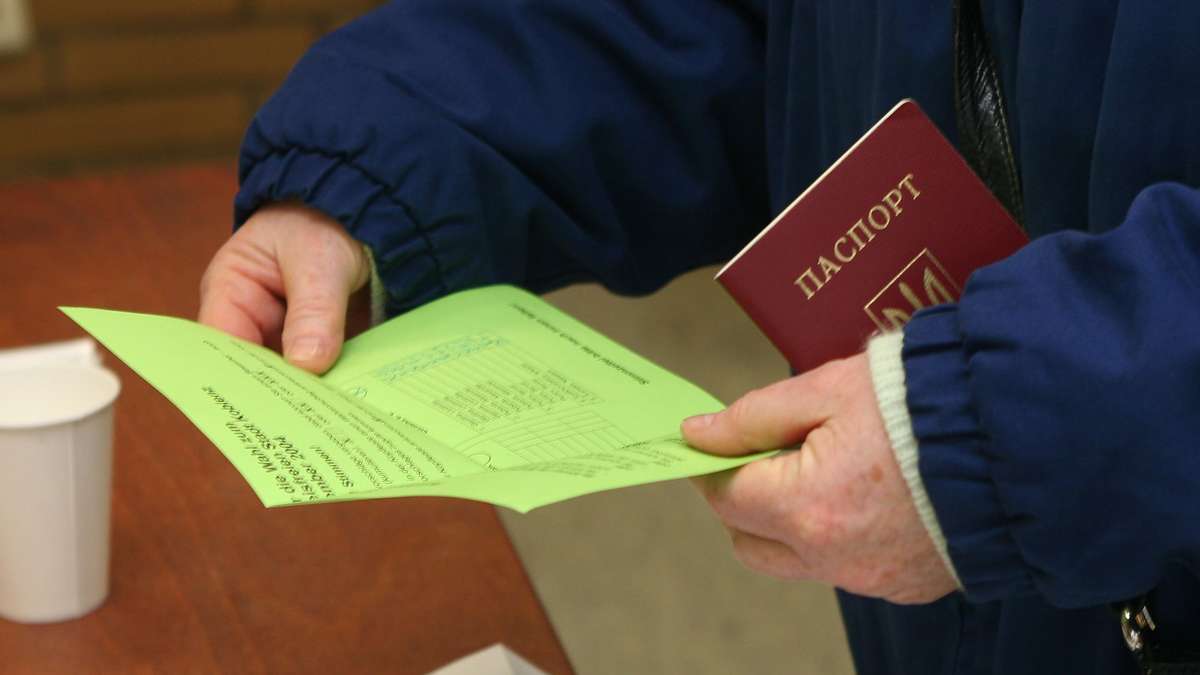

There are local elections on March 15th. Anyone who does not have a German or EU passport can vote for the political representation of foreign citizens in Fulda: the Foreigners' Advisory Council. But what does he actually do?
Fulda – In a few days you can Local election Citizens decide on the political future of their city or municipality and the district. However, around 16,000 residents in the Fulda urban area do not have a German passport and are therefore generally not entitled to vote in the local elections for the city council and the district council.
Local elections in Hesse: The Foreigners' Advisory Council is also elected in Fulda
However, they are not left without a political voice. There is a form of co-determination for them in Fulda – the Foreigners' Advisory Council. According to the Hessian municipal regulations, municipalities with more than 1,000 foreign residents must set up a foreigners' advisory board or, alternatively, an integration commission (see information box). In the Fulda district this affects Petersberg, Künzell, Hünfeld and Fulda – but the advisory board is only elected for local elections in Fulda.
In 2020, there were heated discussions in the Fulda city council about abolishing the foreigners' advisory board. The CDU and CWE wanted to replace the advisory board in favor of an integration commission because they hoped this would create a closer connection to local political structures. However, there were not enough votes for abolition to make a corresponding change.
Foreigners' Advisory Board and Integration Commission
A Foreigners Advisory Board is elected directly by residents without a German passport. One Integration Commission is formed by the municipal council and consists of both community representatives and half of “knowledgeable residents”. The latter are elected by the local council. The commission has an advisory role. It is formed if the Foreigners' Advisory Council election is canceled due to a lack of nominations, if the committee has fewer than three members during its term of election or if the local council decides to appoint it instead of a Foreigners' Advisory Council. Its chairman is the mayor.
The Foreigners' Advisory Council currently consists of ten members who were elected in 2021 from three lists: seven seats are held by the International Social Democratic List, two by the Friedensbrücke, one by the Fulda Democratic Union.
“The Foreigners’ Advisory Council represents the interests of migrant citizens,” explains Abdulkerim Demir (ISL), Chairman of the Foreigners’ Advisory Council. The committee has the right to be heard in the committees of the city council and can submit applications to the committees and the city council. The advisory board members meet in public approximately every six weeks.
“We have submitted many applications in recent years,” says Demir. These include an application for a location for a memorial tree for the Eritrean community and another for the renovation of the washroom in the Islamic cemetery. The advisory board also suggested naming a newly built street after a victim of the attack in Hanau on February 19, 2020, in which nine people with a migration background were shot for racist reasons.
Nevertheless, Demir does not see the work of the advisory board without challenges. In his opinion, cooperation with the city does not always go smoothly. It is sometimes difficult for the committee to get through concerns.
Not enough candidates in Künzell
When asked by our newspaper, Mayor Dag Wehner (CDU) replied: “Since the Foreigners' Advisory Board was only able to make decisions at two of the six scheduled meetings in both 2024 and 2025 due to a lack of participation, it was often unable to make decisions or prepare its own applications.” The city supports the work of the Foreigners' Advisory Council and has no influence on the content of its work.
A look at Künzell shows that a foreigners' advisory board is not a given. There were not enough candidates there for the election. “Only four candidates were nominated. We would have needed nine for an election,” explains Mayor Timo Zentgraf (independent) when asked by our newspaper.
In Fulda, on the other hand, there are enough applicants for the election. A total of 45 names on five lists are on the ballot paper. “We are happy about every new candidate,” emphasizes Abdulkerim Demir, who is himself this year for the new FGG list for the city council is running. He would be grateful for a higher voter turnout this year. In the last election in 2021, this was only 8.7 percent. Participation is important, says Demir, because this is the only way equality can be achieved.