ruth901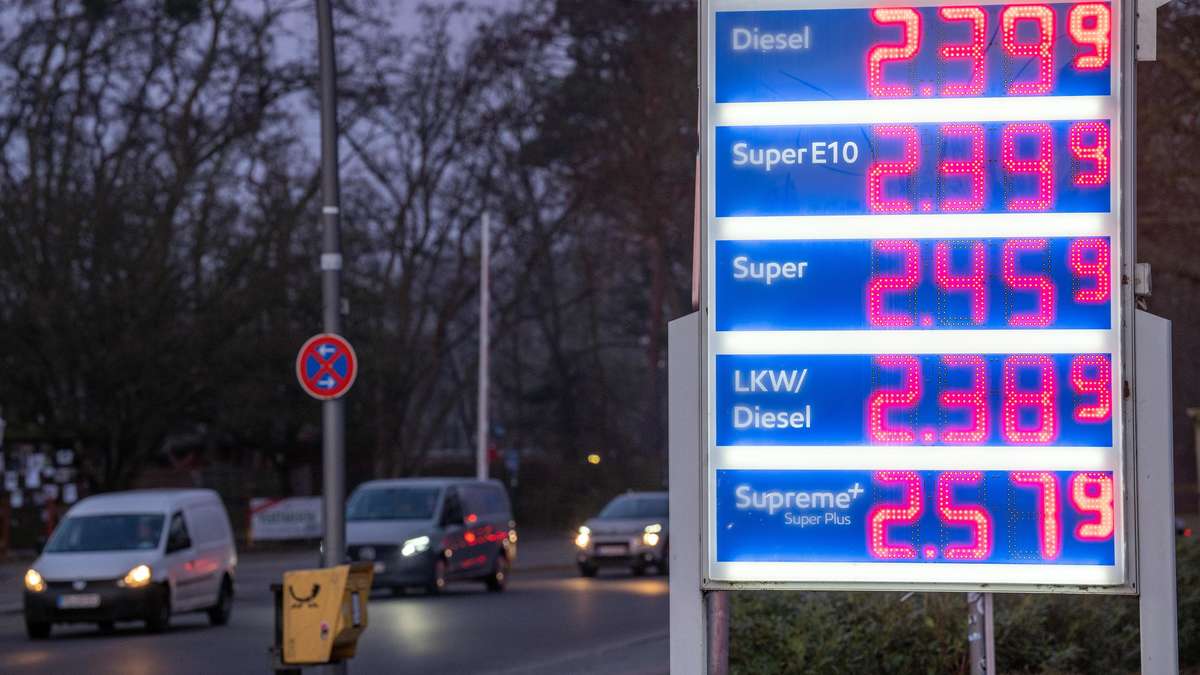
The Iran war is causing fuel prices to rise, daily so far. Diesel and E10 cost over 2 euros. Gas station owners explain why fuel prices have skyrocketed so quickly.
Fulda – The Iran war is driving up fuel prices. Diesel could cost more than 2 euros on a daily average for the first time since 2022. The cheapest common type of gasoline, Super E10, exceeded the nationwide average price of two euros per liter on Thursday (March 5th).

At the price peak in the morning it cost 2,003 euros, as the ADAC announced. The day before, at 1,995 euros, it had remained just below that in the morning. The price of diesel had previously climbed to more than two euros as a result of the disruption caused by the Iran War.
Iran War: Gas station owners declare rapid explosion in costs
During the morning price peak at 7:15 a.m. on Wednesday (March 4th), the ADAC determined a nationwide average price of 2.054 euros per liter of diesel. Then on Thursday morning, the national average fuel reached 2.086.
Diesel is usually cheaper than E10 because it is taxed significantly lower. But its price is more vulnerable to crises. Even in the early stages of the Ukraine war, it reacted more strongly than gasoline. One of the reasons is that diesel is also used as a replacement for gas and plays a larger role in the industry.
Both prices can drop quite a bit over the course of the day – that would correspond to developments in normal times. Recently, however, the general increase has overshadowed this. Just a few weeks ago, with a bit of luck, you could still fill up with diesel for a price of 1.50 euros per liter.
The nationwide daily average value, which compensates for the strong fluctuations over the course of the day and is therefore easier to compare in the long term, was 1.897 euros for a liter of E10 and 1.917 euros for a liter of diesel on Tuesday. That was 12.1 and 17.7 cents more than the previous Friday.
An ADAC spokeswoman criticized the price increases as disproportionately high. The oil industry is passing on the increased price of crude oil to consumers before the costs are incurred, because the tank farms are still filled with fuel purchased at lower prices. In the past, fuel prices did not follow falling crude oil prices so quickly.

“We don't have fuel reserves for several weeks. If we want to continue to ensure supplies, we now have to get fuel for the purchase price, which is expensive due to the war. In order to be able to pay, we have to raise the prices for consumers now,” explains Reinhard Fehl, gas station owner in Wartenberg in the Vogelsberg district.
The price at the gas station is always adjusted to the price level when purchasing. Fehl does not expect such a rapid increase in prices as has occurred in the past few days in the near future. Of course, the development is closely linked to that in the Middle East, but the gas station owner from Hesse no longer sees such a “sudden increase”.
Gas station owners explain rapid price explosion
Udo Weber, managing director of Knittel MobileEnergie, which operates the Avia gas station in Petersberg near Fulda, sees it similarly. The stored fuel is usually enough for about half a week. In order to continue to fill up at gas stations, new fuel must now be purchased at the purchase price that has been driven up by the war.
“We always calculate fuel prices with the replacement costs in mind. Falling and rising replacement costs have a direct impact at the pump,” says Udo Weber and adds: “The problem is not availability, but the development on the stock market.”
A look at the ARA region – consisting of the ports of Amsterdam, Rotterdam and Antwerp – shows how prices will also develop in Germany. According to Weber, this area is a central wholesale and pricing market for fuels. The prices traded there are an important reference for German refineries, dealers and gas stations.

The Federal Cartel Office speaks of a rocket-and-pen effect in relation to the skyrocketing fuel prices. The authorities say they are now keeping an eye on this. Your boss, Andreas Mundt, advises comparing prices carefully in the current situation. The ADAC also recommends comparison.
ADAC fuel market expert Christian Laberer believes the current E10 price is too high in relation to crude oil and the dollar exchange rate. With diesel, other factors come into play. As long as the current crisis lasts, diesel will probably remain more expensive than E10. But as soon as the situation calms down and the price of oil falls, this will have to be “passed on to consumers quickly,” says Laberer.
The Federal Cartel Office speaks of the rocket-and-pen effect
Since the conflict in the Middle East escalated on Saturday, prices for oil and subsequently also for fuel and heating oil have been rising. The Strait of Hormuz plays an important role in this. Around a fifth of global oil shipments pass through this bottleneck off the coast of Iran. Any disruption there could raise energy prices, and Iran has restricted shipping in response to the attacks.
The price of oil – together with the dollar exchange rate – is the most important driver of changes in the price of fuel. The Fuels and Energy trade association also pointed out that the Middle East is currently also partially failing as a supplier of finished fuel. According to Economics Minister Katherina Reiche, Germany's supply of oil and gas is not at risk.
In view of the sharp increase in prices, the traffic club has also adjusted its previously rather critical position on a fuel discount. Politicians must promptly consider a temporary reduction in the energy tax on fuels in order to limit the additional burdens on drivers for the duration of the crisis, said a spokeswoman.
Diesel could be reduced to the EU minimum tax rate for energy and petrol could be reduced similarly. That would save around 15 cents per liter of fuel. However, according to Economics Minister Katherina Reiche, the federal government is not planning to curb fuel prices. “That is not on the agenda,” said the CDU politician in Munich.
Price prediction for the future is difficult
The coalition factions in the Bundestag are increasingly focusing on the rising prices for fuel and energy and are setting up a working group on this. The aim of the task force should be to analyze developments and examine options for action in close cooperation with the government. Knittel boss Udo Weber doesn't want to make a price prediction. “It all depends on how the war situation develops.” (with dpa material)