ruth901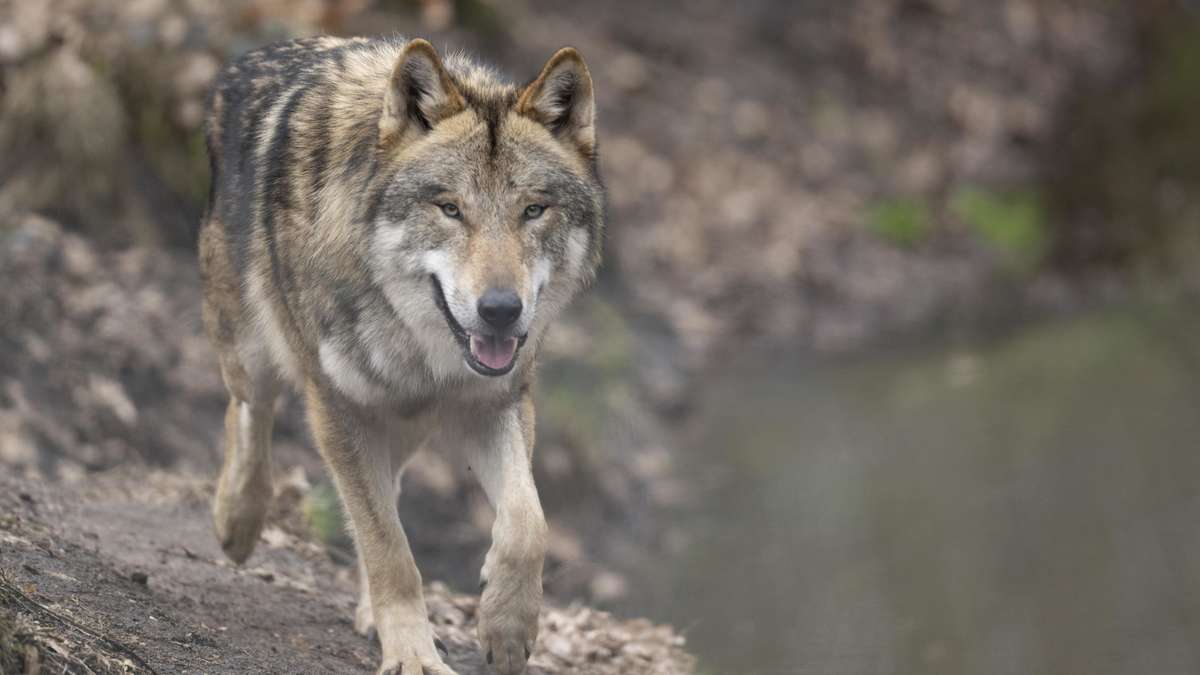
The wolf is back in the Rhön and is causing tension. A panel discussion will highlight the challenges and opportunities for the region.
Fulda – The wolf has been back in Germany for around 25 years – and in the Rhön for almost ten years. Since then, his return has also brought with it questions and concerns, which were the focus of a panel discussion at the Eduard Stieler School on Tuesday evening (June 2nd).

The panel discussion “The Wolf in the Rhön”, which took place in the Eduard Stieler School, was objective in tone. Nevertheless, it became clear that the treatment of the animal continues to provoke different opinions in the region. The return of the wolf is not a new development.
The Wolf in the Rhön: Experts discuss conflicts and opportunities
After the animals were considered extinct in Germany for a long time, they have been spreading again for around 25 years. In Hesse, too, there are now three permanent territories in Greifenstein, Rüdesheim and Waldkappel as well as a territory in Wildflecke, Bavarian. Young animals usually stay in their pack for around two years.
Then they look for their own territories as so-called “wandering wolves”. They sometimes cover long distances. Luisa Traut from the Hesse Wolf Center reported on the podium about a case from 2025 in which a wolf detected in the Odenwald moved on to southern Denmark within three months.
“The animals often migrate and are only in Hesse for a short time,” she explained. In principle, wolves could appear anywhere in the state. However, sightings occur again and again in the region around Ehrenberg – the wolf center is currently checking whether the animals have settled there permanently.
For the mayor of the municipality of Ehrenberg, Peter Kirchner (independent), wolves become a problem especially when farm animals are killed. In the Fulda district, eight so-called “livestock damage” were reported from May 1, 2025 to today, and in three cases a wolf cannot be ruled out.

“This is not only an economic loss for the animal owners, but also an emotional thing when they see their animals die – especially if it doesn't just happen once,” says Kirchner. It also plays a role that affected farmers could question their work if repeated incidents occur.
“In this respect, the topic concerns us intensively because grazing livestock plays an important role in our landscape,” said the mayor of Ehrenberg. The community therefore has a great interest in finding a sustainable solution for dealing with wolves.
Combination of electric fences and livestock guard dogs
For the farmer and chairman of the association of hunting cooperatives and self-hunting owners in the Fulda district, Richard Hahn, there is currently no viable regulation in sight. If an animal owner discovers a possible wolf tear, the bureaucratic hurdles are too high to receive compensation.
“First he has to know where to turn.” It often takes several hours for specialist staff to arrive on site to secure DNA samples, for example. This makes it increasingly difficult to prove that it is actually a wolf tear. There are also consequential damages for which there is no compensation.
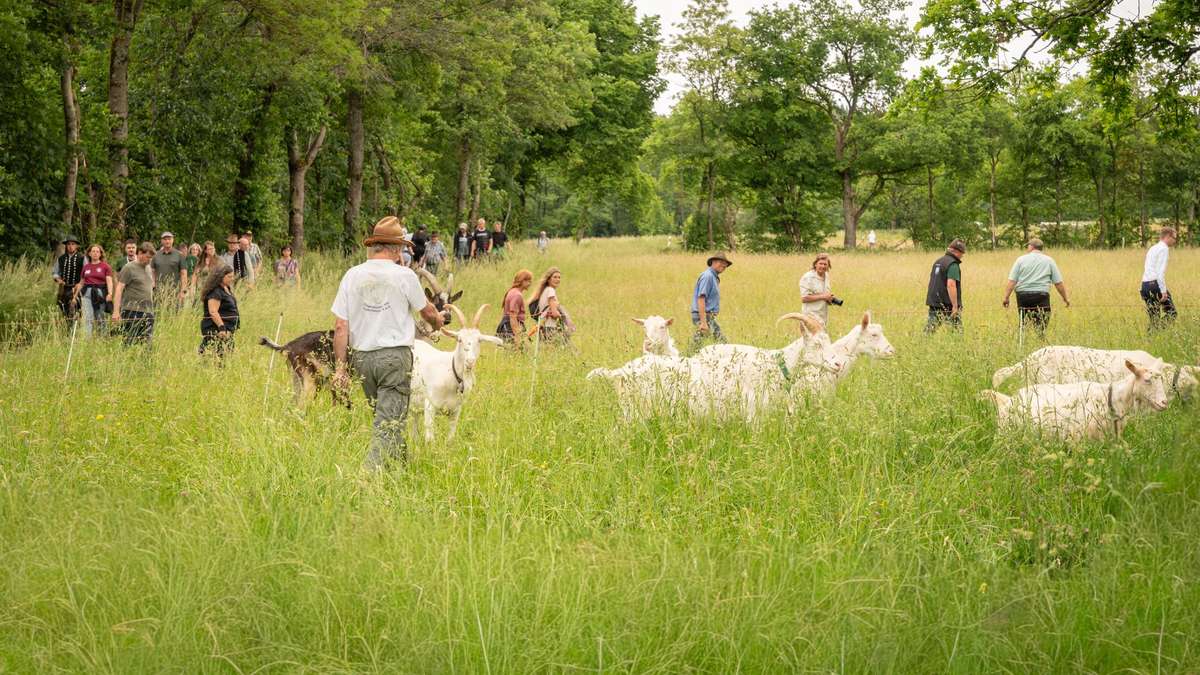
“An animal owner cannot feel like a supplicant and has to produce numerous documents before he receives compensation.” From the perspective of the biologist and nature filmmaker Dr. However, according to Heribert Schöller, damage to livestock can be avoided. A combination of electric fences and livestock guard dogs could help to effectively protect grazing animals from wolves.
Background: Saw a wolf – what now?
Luisa Traut from the Hesse Wolf Center recommends: Stay calm. If you don't want to watch the wolf, you can make yourself known as a human by clapping or shouting – i.e. by making noises that are atypical in nature. As a rule, this is enough for the animal to move away.
Young animals are often curious and therefore sometimes stay put for longer periods of time. If a wolf approaches, it can help to confidently take a few steps towards it or throw an object in its direction. It is important to maintain a safety distance of at least 30 meters.
“I think people in Germany have to learn to work with these dogs again.” The chairman of the Association of Hunting Cooperatives in the Fulda district countered that livestock guard dogs require a lot of time and money.
“Of course, the hunters advocated early on for the wolf to be included in hunting law,” said Dr. Rudolf Leinweber, chairman of the Rhön-Vogelsberg hunting association. Nevertheless, his opinion is: The wolf is part of the local fauna. This is precisely why an objective discussion of the topic is necessary. “The acceptance that we have to give the wolf is the most important goal.”