ruth901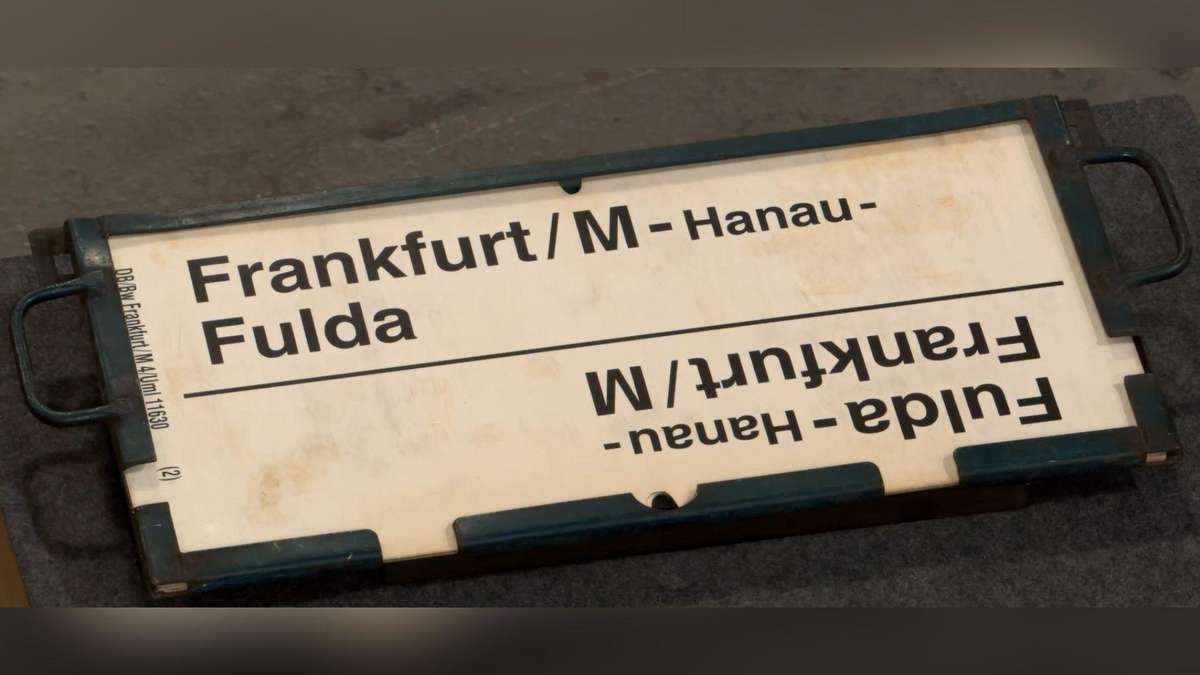
So-called train direction signs from the 1970s caused a stir at “Bares für Rares”. They come from the regional train line from Frankfurt to Fulda.
Cologne/Fulda – Would have Lisa Nüdling in the “Cash for rares“-Episode from May 27th, she could have enlightened her colleague Daniel Meyer – he lives in Münster, Westphalia – because the antique dealer is wondering which of the railway lines that are shown on the train signs from the 1970s are still in operation today.

The simple answer: all of them. It's not just Frankfurt-Fulda that is taking part in the sign collection, which a grandma-grandchild duo from North Rhine-Westphalia is bringing to the Pulheim rolling mill. The signs also show sections of the Kinzig Valley Railway from Hanau to Schlüchtern via Gelnhausen and from Frankfurt to Waechtersbach. It also goes from Aschaffenburg Lower Franconia via Hanau to Frankfurt.
Old train signs to Fulda inspire at “Cash for Rares”
The route is so heavily used – by both regional and long-distance trains – that it is chronically overloaded, currently expanded to four tracks between Hanau and Gelnhausen will and for A general renovation including a six-month full closure is planned for next year. Many a troubled commuter will be able to tell a thing or two about it. However, these pitfalls of train travel are not an issue in the “Cash for Rares” studio.
On the contrary, as Trader Sarah Schreiber, who took a baby break of several months last year When she reads the destination Fulda, she is happy: “We can visit Lisa there.” Of course this means Lisa Nüdling. The jewelry and art dealer, who has been part of the “Bares für Rares” team since 2017, lives in the baroque city.
A real bidding war then broke out for a total of five train route signs and a bracket. After all, you don't find such pieces very often anymore. They used to be attached to trains to show passengers where they were going. Nowadays, electronic displays have long since taken over this task.
Kinzigtal railway signs trigger bidding war at “Bares für Rares”.
Owner Ulla Schmitz, who lives with grandson Lars Meinhardt ZDF-Studio came to Pulheim and found the signs in the attic of her house. She bought the property in a railway settlement 40 years ago. Moderator Horst Lichter jokes that the proceeds from the sale could be invested in a new airplane for grandson Lars, an amateur glider pilot.
However, vintage expert Detlev Kümmel's estimate isn't quite that high; the small collection could probably fetch around 100 to 150 euros. The dealers see it similarly, but they all probably want the signs. Everyone in the group – in addition to Daniel Meyer and Sarah Schreiber, there are Elke Velten, Wolfgang Pauritsch and Jan Čížek – makes at least one bid.

When Daniel Meyer offers 100 euros, negotiator Lars Meinhardt doesn't want to take action yet. He brings the expertise cap of 150 euros into play, and Meyer then comes up with a bid of 110 euros. Meinhardt suggests 120 euros, which Meyer no longer wants to offer. Wolfgang Pauritsch then intervenes and offers the desired 120 euros – and Daniel Meyer grudgingly forces his way to 130 euros.
Now he gets the contract, and Lars Meinhardt and Grandma Ulla leave the dealer room satisfied. When it comes to “Cash for Rares”, it always pays off to negotiate cleverly. For example, we also experienced this two brothers who significantly increased the price of their antique speculoos machine with a clever offer.