ruth901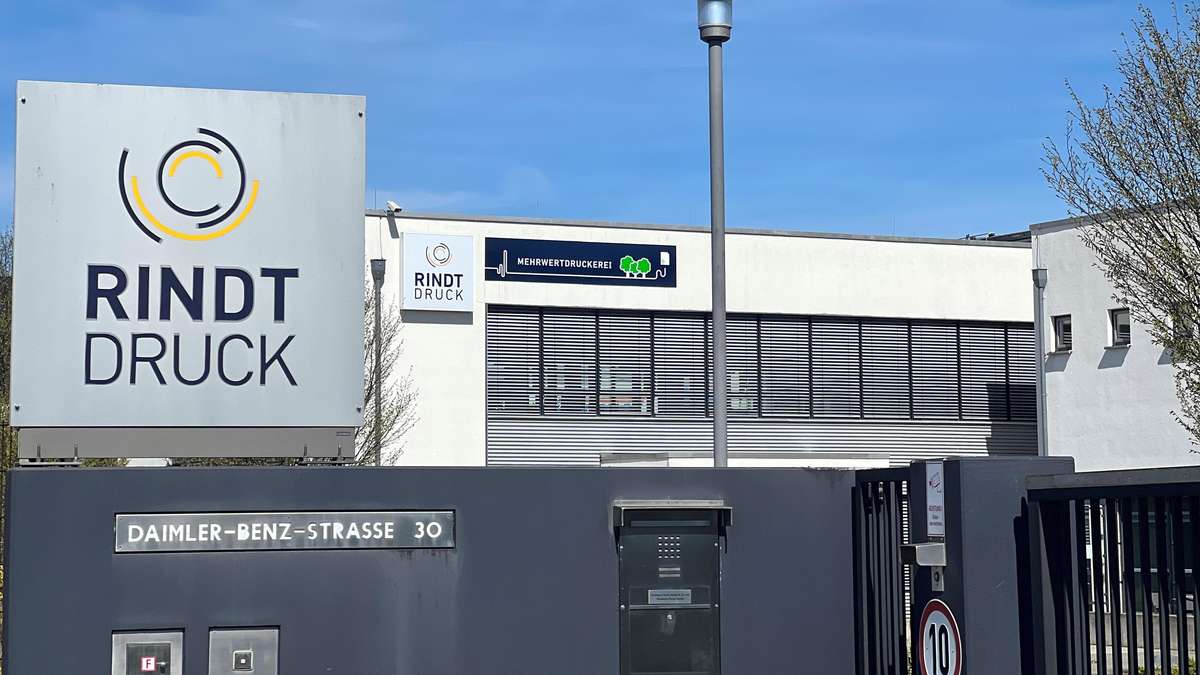

End of a traditional business: After more than 90 years of company history, the Fulda printing company Rindt is ceasing production operations.
Fulda – After The company had to file for bankruptcy at the end of Januaryit is now clear that there will be no future for Rindt Druck. Rising costs, declining print volumes and structural changes in the industry are putting traditional production models under pressure.
After almost 100 years: Rindt Druck from Fulda stops production
Even modern investments, including a high-performance sheetfed offset press worth seven figures, could not ensure the necessary economic stability under the current market conditions. “The general conditions have changed faster than the amortization cycles of such investments,” explains Sebastian Jerabeck, managing partner of Rindt.
Another reason is the tense economic situation in the region and beyond. “Many larger companies are under pressure, which has had a direct impact on our print shop’s order situation.” Paradoxically, modern technical equipment also became a problem.
Rindt pressure
The Rindt printing company from Fulda is one of the traditional companies in the East Hesse printing industry. The company was founded in 1931 by Käthe and Bernhard Rindt and can look back on over 90 years of company history.
Over the decades, the company developed from a small printing company into a modern service provider for printed products. Until recently, Rindt offered a wide range of services, including sheetfed offset and digital printing, prepress, finishing and bookbinding. The company saw itself as a so-called “value-added printer” that, in addition to production, also focused on advice and individual customer solutions.
In recent years, the company had invested significantly in its machinery and was considered to be efficient and technically well positioned. “But given the current structural change in the printing industry, such high-performance machines can only be utilized at significant discounts,” says Jerabeck. Another factor that increased the economic difficulties.
At the same time, new perspectives arise: part of the workforce moves to the Waitkewitsch printing house in Alsfeld. This step not only secures valuable know-how, but also seamlessly continues some of the existing customer relationships. The Rindt case is an example of the profound change in the printing industry.