ruth901
A little tutoring lesson!Why do we celebrate Easter?
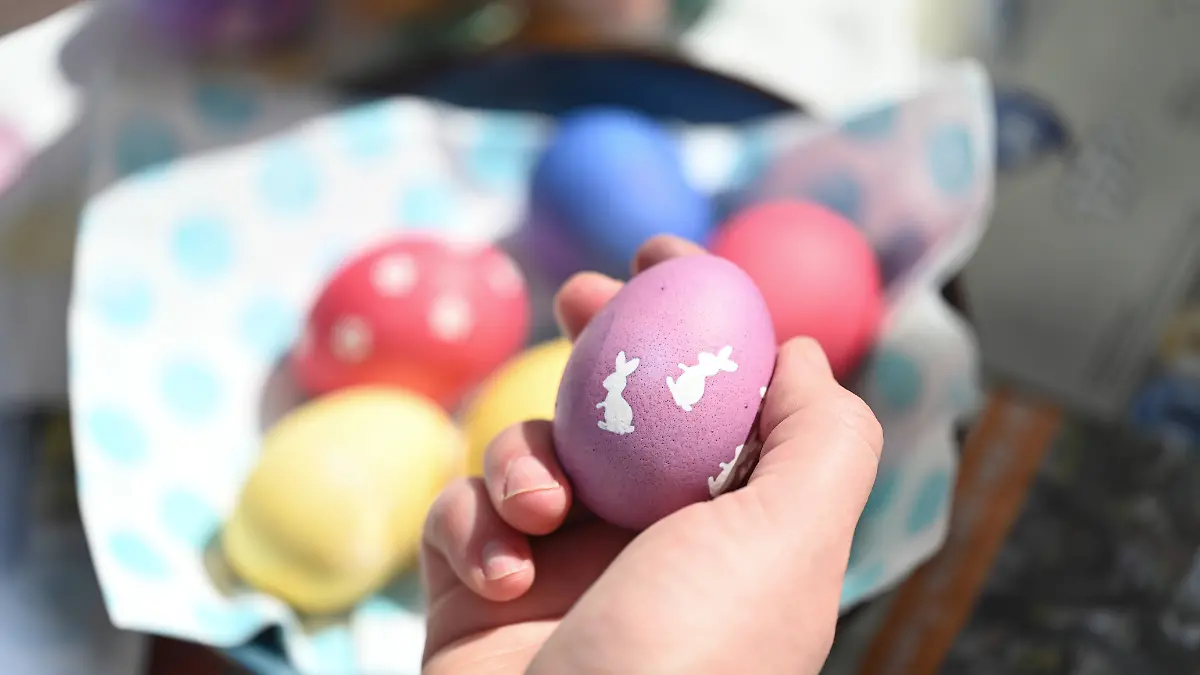
Dying eggs is a tradition in many families.
www.imago-images.de, IMAGO/diebildwerft
Look for colorful eggs and eggs hidden by the Easter Bunny!
THIS ensures fun for young and old and is part of Easter like no other tradition. And: We look forward to a relaxing time with our loved ones, similar to Christmas. But the Christian origins of the holidays seem to be increasingly receding into the background. There's a little tutoring session here!
This is why we celebrate Easter!
Easter is one of the most important holidays in Christianity. At Easter it will be Resurrection of Jesus Christ Commemorated by the dead, which according to the New Testament took place on the third day after his crucifixion. The ecclesiastical one is also corresponding Holy Week originated (from Old High German “kara” – grief, mourning): Good Friday is considered the day of the death of Jesus Christ, Holy Saturday is the day of rest of the grave and Easter Sunday is the day of resurrection.
When is Easter?

According to the New Testament, Christ's suffering, death and resurrection occurred during the period of Passover – a movable Jewish festival. The date for Easter therefore always coincides with this date. The Easter Sunday falls on April 20th every year.
These are the nationwide public holidays in the coming years:
-
Easter 2026: 03.04. (Good Friday), April 6th (Easter Monday)
-
Easter 2027: 03/26 (Good Friday), March 28th (Easter Monday)
-
Easter 2028: April 13th (Good Friday), April 17th (Easter Monday)
Reading tip: Shopping over Easter 2025! When supermarkets and bakeries are open
Recommendations from our partners
Video tip: Make a quick Easter door wreath
Why is Easter even called Easter?
There are various theories about the origin of the name “Easter”. One possibility: According to the Duden, the word comes from the old Germanic Austrō/Ausro (“dawn”), which possibly referred to a Germanic spring festival. In Christianity, the dawn is also the symbol of the resurrection.
What does the Easter Bunny have to do with all of this?
Many Easter customs are closely linked to spring and its typical seasonal phenomena. Because of its rapid reproduction, the brown hare has always been a symbol of fertility and life: It usually gives birth to its many young in March. The first written “evidence” for the Easter bunny comes from a doctoral thesis from 1682. Since around that time, he has also been traded as a supplier of colorful eggs, alongside other animals. In the 19th century it finally became established as a symbol of Easter.
Reading tip: Easter clap! Weather changes extremely during Holy Week
And why do we paint Easter eggs?
This was already true in ancient cultures Egg as a symbol of fertility and rebirth. Apparently, even in ancient Rome, colorful eggs were given away to celebrate the spring equinoxes. In Christianity, the concept was further developed: the chick that breaks through the shell is compared to Jesus Christ, who rises intact from his grave.
It has not been clearly proven why the eggs are painted brightly. In the Middle Ages they were apparently colored red – as a symbol of the shed blood of Jesus. One theory is that colorful paint was also used to distinguish fresh eggs from older, hard-boiled ones during Lent before Easter.
Reading tip: Other countries, other customs: You can read about how strangely Easter is celebrated around the world here!