ruth901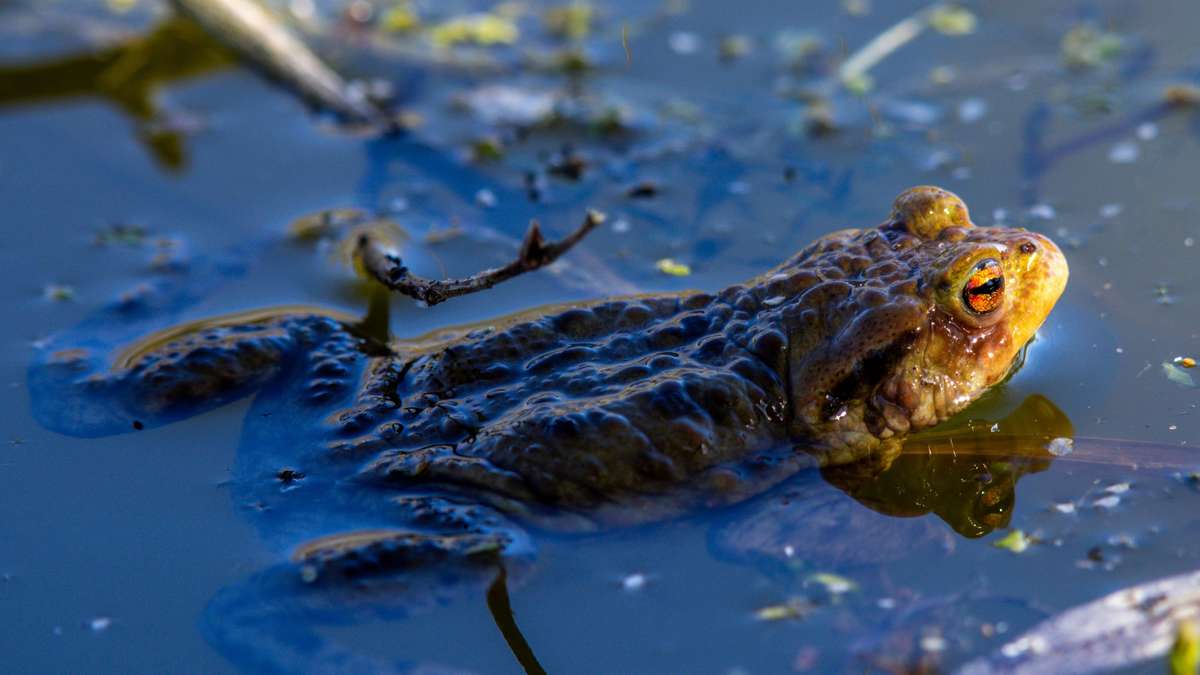

The amphibian migration begins in the Rhön. Young conservationists are helping to get the animals safely across the roads.
Hilders/Burkardroth – A fascinating natural spectacle begins in the Rhön when the temperatures rise and the nights become wetter: Thousands of amphibians make their way to their spawning grounds. In order to prevent them from endangering themselves on the roads, dedicated helpers intervene, including the youngest conservationists from the Fulda region.
The junior rangers of the Bavarian Rhön Nature Park and Biosphere Reserve actively support the erection of amphibian protection fences. These fences are being built in collaboration with the Federal Nature Conservation Association, which oversees several of these protective measures in the Bad Kissingen district, as reported by the Unesco Rhön Biosphere Reserve based in Hilders.
Thousands of amphibians migrate to spawning waters in the Rhön
In Premich, a district of the Burkardroth market in the Bad Kissingen district of Lower Franconia, the amphibian migration season is approaching. To protect the animals from road traffic, forestry workers and volunteers erect toad fences each year that are approximately one kilometer long and are checked regularly.
Every helping hand is welcome. That's why the junior rangers meet with Joseph May from the Federal Nature Conservation Association to build another section of the fence together. “In 2025 we counted over 4,000 common toads here. Unfortunately, the number of newts has decreased,” reports Joseph May.

“In 2025, we had three fire salamanders on the toad fence for the first time,” explains Joseph May, who has been looking after the amphibian protection fences near Premich for years. He shows the helpers how to bury the collection buckets at the beginning of the fence so that the amphibians don't wander past them.
The animals can be carried safely across the street in these buckets. The junior rangers eagerly get to work, driving the posts into the ground and attaching the protective fence to them. They then seal all holes and gaps so that no animals can slip under the fence. To do this, they use local materials such as branches, leaves, stones and earth.
The Junior Rangers in the Rhön meet monthly
After their work, the young conservationists explore the adjacent ponds. With the permission of the owner and the nature conservation authority, they use landing nets to search for aquatic animals. There are no amphibians to be seen yet, but there are water beetles, isopods, backswimmers, mayflies and dragonfly larvae.
“Look what I found!” Junior Ranger Rosalie shouts enthusiastically and shows the others a shell that is almost twelve centimeters in size. Everyone excitedly examines the new find. “It looks like a common pond mussel,” suspects nature park ranger Amelie Nöth, who helps identify the animals.
Explore the Rhön Biosphere Reserve via app
With the app “Rhön Biosphere Reserve” you can easily explore the transnational UNESCO biosphere reserve digitally. A 3D map offers tour and excursion tips, and a routing tool records hiking and cycling routes. The app provides valuable information about Rhön nature, behavioral tips and a “virtual panorama” for an all-round view – also available in offline mode. The free app is available for iPhones and Android devices in the app stores.
After all finds have been documented, the small pond inhabitants are carefully returned. “You did an excellent job today. Thank you very much for your commitment!”, said nature park ranger Martina Faber at the end of the event. The Junior Ranger group in the Bavarian Rhön has been around for a year and a half now.
Once a month, nature-loving children aged seven to 13 meet to plant hedges, build nesting boxes, get to know animals and plants or help maintain habitats. For information about participation and application, please send an email to juniorranger@nbr-rhoen.de.