ruth901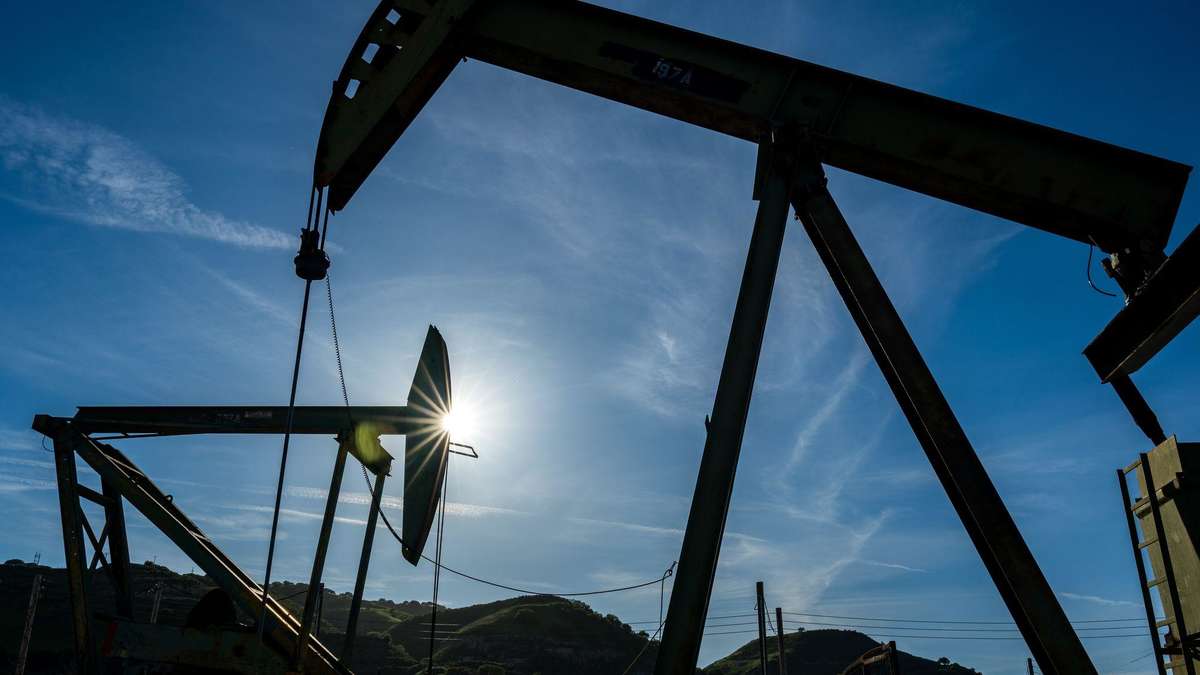
Rising energy prices, overloaded transport routes and growing cost pressure: the war in Iran is hitting East Hesse at a moment of cautious hope.
Fulda district – This year’s spring actually promised a gentle revival of the economy. But the war has long since arrived in the Fulda region – far away from the Persian Gulf. “He meets the German and East Hesse's economy was in a phase in which there were signs of a slight upswing“, says Michael Konow, Managing Director of the Fulda Chamber of Commerce and Industry (IHK).

The region's dependence on fossil fuels makes it vulnerable: rising energy prices are primarily affecting logistics companies and energy-intensive companies.
Upswing stifled: War in Iran weighs on economy in Fulda
At the Haulage company coincidence, although some of the fleet now relies on e-mobility, This is concrete: just a few cents more per liter of fuel adds up to tens of thousands of euros. “The financial burden caused by the development of diesel costs is enormous,” says sales manager Holger Hamperl. “The transport companies that are closely associated with us are also reaching their limits.”
At the same time, demand remains subdued: “We have been looking at a stagnating or slightly declining order situation for some time.” A slight recovery in the first quarter is now being offset by new pressures. There are also disruptions in global logistics. By chance, the sea freight sector is only affected sporadically, as hardly any goods pass through the Strait of Hormuz. As a result, air freight connections via hubs in the Arab Emirates are coming to a standstill – flights are canceled, postponed, and planes are overbooked. The result: additional costs such as bunker surcharges and security fees of “extreme amounts,” says Hamperl.
Some of the costs can be passed on via floater agreements. But the adjustment takes place with a delay and companies have to make advance payments. “If the situation remains this tense for weeks and months, it will become increasingly critical and, in some cases, a threat to the existence of service providers.”
If the war in Iran drags on, livelihoods will be threatened
What becomes visible in logistics also becomes apparent in agriculture – more slowly, but just as profoundly. Sebastian Schramm, managing director of the district farmers' association, who recently welcomed the Federal Minister of Agriculture to the Rhön, speaks of “significant challenges”. Rising fuel costs are making all soil cultivation, harvesting and transport more expensive.
At the same time, the prices for inputs are rising: nitrogen fertilizer, for example, has become massively more expensive within just a few days. The real problem: “The additional burdens have not yet been reflected in correspondingly higher producer prices.” Schramm warns of structural consequences, including the closure of further businesses. His demand: relief from CO₂ pricing on diesel, for example – that would help all energy-dependent industries.
Other companies have so far been less affected. Jumo from Fulda, a global manufacturer of sensor and automation technology, reports stable business: “We currently see no immediate impact on the Fulda location,” says spokesman Michael Brosig. Demand and production are running according to plan and the supply chains are broadly based.
Jumo with stable business – employees withdrawn from Dubai
However, as a precautionary measure, employees were withdrawn from the sales office in Dubai. And the uncertainty remains: “Geopolitical crises can influence markets and investments at any time.” The situation in the Middle East is difficult to predict and potential risks are constantly being reassessed.
The first cracks are also beginning to appear in tourism. “We are lucky that we are not so involved in the Middle East,” says Dennis Krug, managing director of Reisewelt Teiser & Hütter in Neuhof. Nevertheless, he reports canceled cruises in the Persian Gulf and some canceled individual trips. Group trips to the region are largely on hold – except for one to Oman. “We have no illusions that it will take place,” says Krug. Rising kerosene prices are not yet noticeable, but are likely to follow. “I expect that shipping companies and airlines will react. There is probably no way around it.”
For many people, the war is primarily visible at the gas pump. Udo Weber, managing director of J. Knittel Söhne Verwaltungsgesellschaft, reports a significant price increase: from an average of 1.7183 euros in February – including energy tax, CO₂ levy, greenhouse gas reduction levy and sales tax – to 2.0127 euros in March. That is an increase of 17.13 percent.
Consumers are noticing rising prices when filling up the tank and will soon probably be on holiday
Customers are using fuel more consciously, but overall demand remains stable. “Mobility is indispensable for most people,” explains Weber. In the heating oil business, however, demand has plummeted – despite efforts to offer attractive prices. The interaction at the gas stations is usually respectful, even if there are occasional emotional discussions. “Then fact-based exchange and transparent information are crucial.”
And this is how a war, thousands of kilometers away, also affects the Fulda region. The question: What happens next? IHK boss Michael Konow makes it clear: If the war lasts longer, the Strait of Hormuz fails permanently and infrastructure for fossil fuels is destroyed, then there is a risk of “a sharp economic downturn, the economic and social consequences of which I find difficult to imagine.”