ruth901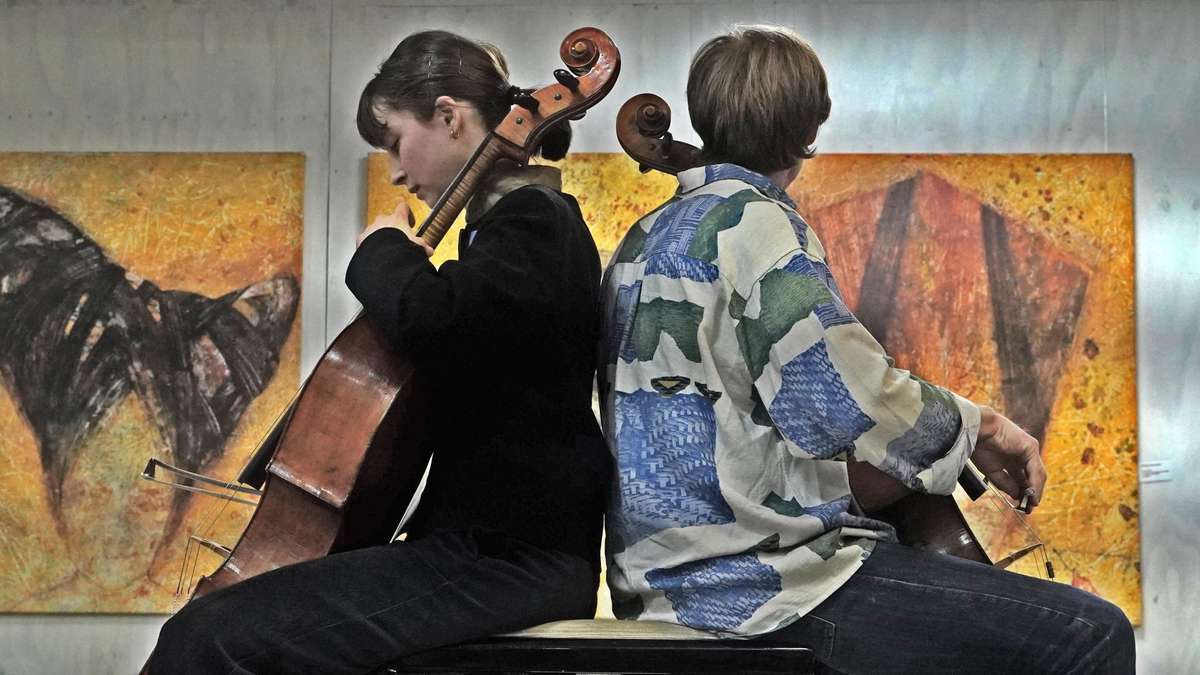

The Cultural Works Week in Schlüchtern invites you to an artistic adventure. Its motto is “SpielARTen”.
Schlüchtern – The title is already a play on words and is therefore part of the program: SpielARTen is the motto under which the cultural work week in Schlüchtern in Kinzigtal presents a varied spectrum of creative, musical and performing arts. The Kulturwerk Week wants to invite you to (again) find a playful approach to everyday life, which is so much characterized by reacting, functioning and optimizing.
Monica Opsahl opened the cultural work week at “The Stage” in Schlüchtern together with exhibiting artists. With a critical look at the “big game” in the world, which is currently keeping everything and everyone in suspense and unintentionally turning people into audiences, Opsahl welcomed her audience to the exhibition rooms of “The Stage”.
Schlüchtern celebrates art – Cultural Works Week opens
According to the moderator, it is all the more important to let art take you along in its different forms of play. The cultural work week offers the best opportunity to do this over ten days. As a representative of the city of Schlüchtern, city councilor Jürgen Heil (CDU) emphasized the great value of the cultural work week for Schlüchtern and far beyond.
“It fits the city’s portfolio perfectly,” said Heil, who promised that the annual funding of 4,750 euros for this institution would continue in the future. The focus of the opening event was the artists Dorle Obländer, Angelika Summa, Martina Bernasko, Martina Tornow and Bernd Schulz, whose works are exhibited in “The Stage” on all days of the Cultural Works Week.
Cultural Works Week program
Saturday, March 21st, 8:10 p.m.: ArtoDance, “Dance, Dorle, Dance!”
Sunday, March 22nd, 6:10 p.m.: Andreas Wellano
Monday, March 23rd, 8:10 p.m.: “Klang-Börper/Börper-Klang” with Artodance
Tuesday, March 24th, 8:10 p.m.: “Love, Thirst and Politics”, Thomas Gsella
Wednesday, March 25th, 7:10 p.m.: Christoph Quarch
Thursday, March 26th, 7:10 p.m.: “Five Brass On A Hand”
Friday, March 27th, 8:10 p.m.: “Käpt'n Offenbach”
Saturday, March 28th, 8:10 p.m.: Theater “Mimikri – I don’t grumble”
Sunday, March 29th, 10:10 a.m.: Creative Day
Sunday, March 29th, 4:10 p.m.: Finissage
Dorle Obländer was co-founder of the cultural work in 2010. She created paintings and sculptures in which she humorously and ironically depicted life in its front and back facets. The district culture prize winner died ten years ago. The Cultural Works Week honored her with an exhibition of her work, into which Luc Laignel gave the audience a profound insight.
With Pink Floyd's “Wish You Were Here”, the “Gibsies” musically paid homage to Obländer, who was noticeably appreciated by those present. Nadja Reich and Leander Kippenberg then transformed Angelika Summa's creative art into music with cello sounds.

Summa transforms so-called semi-finished products, industrially prefabricated materials such as wires, pipes, screws and structural steel, into delicate objects and expansive sculptures. “I feel understood,” said the sculptor from Würzburg after the cello interpretation of her exhibited works and then gave the audience an insight into her creativity and craftsmanship.
Bernd Schulz, a photographing, painting and design artist from Braunschweig, then took part into his work. As he explains, a car journey was abruptly interrupted to photograph the mistletoe in the branches of a tree on the side of the road. Through his artistic treatment, it then becomes a mystical-looking work, which Schulz's work is now represented in, among other things, the exhibition of the Cultural Works Week. “For me, light is a malleable material from which I can create sculptures.”
Goldsmith internationally known for her knot jewelry
The painter and graphic artist Martina Bernasko from Auersmacher presented exhibits in which she uses formal languages that she combines into new constellations based on imprints, relationships and entanglements. For her, sensing moods and conflicts is the impulse for composition in her works.
Martina Tornow then gave an insight into her artistic work. The goldsmith from Rodenbach with a studio in Hanau is a district culture prize winner and is known nationally and internationally for her knot jewelry. The pieces of jewelry they made have one thing in common: the knot.
And, according to the artist, it is an “open symbol, because you can knot it and untie it. You tie it and you can also untie it again.” The Gibsies, the Trio 64 and the cellists Nadja Reich and Leander Kippenberg created a musical knot throughout the evening and between the artists' individual performances. (by Roland Bauernschubert)