ruth901
During periods or menopauseSleep problems? What can help you now!
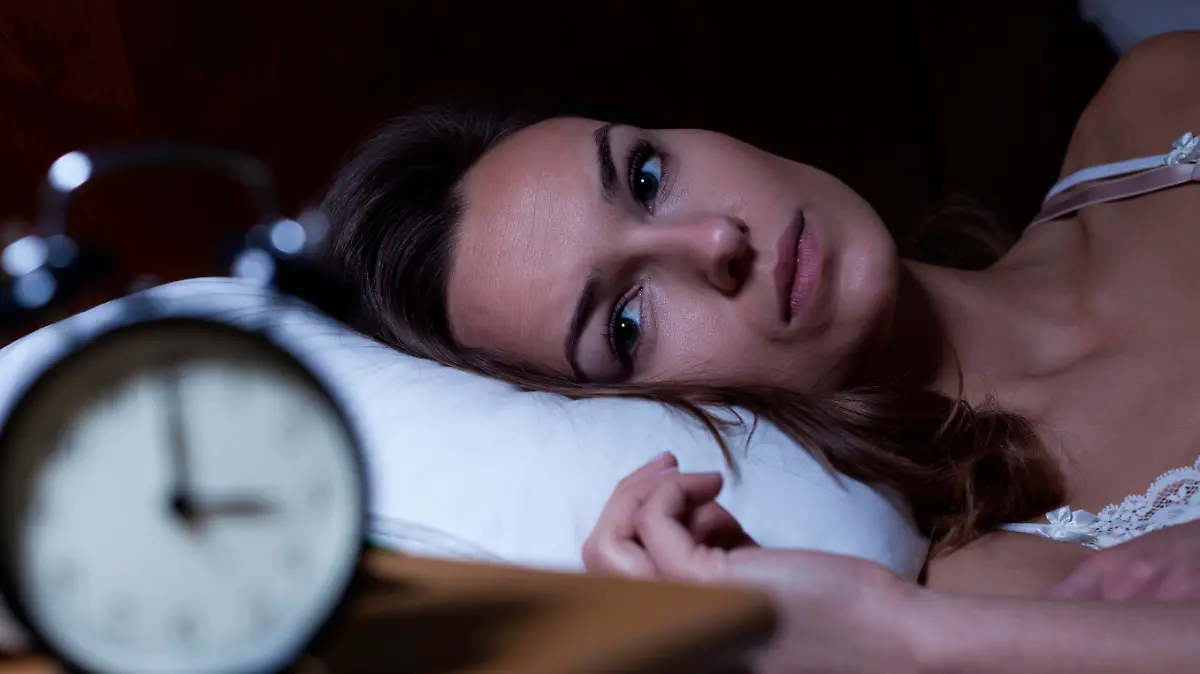
Many women struggle with sleep disorders – especially during their periods and during menopause. (symbol image)
Do you also struggle with sleep problems?
Not being able to sleep – a very common and very stressful problem. I see women in my practice every day who suffer from problems falling asleep and staying asleep. Many of them are completely exhausted and struggle to cope with their everyday lives. Of course, lack of sleep is a form of torture – and constantly not getting enough sleep takes a toll on your body and soul.

Gynecologist Dr. med. Judith Bildau explains what can help with hormonal sleep disorders.
Dr. med. Judith Bildau
Women & sleep – a complicated relationship
Most of the women who come to me because they can't sleep at night are in the middle of menopause. Women generally have a somewhat complicated relationship with the topic of sleep. It's even intended that way by nature! It has been proven that women's sleep is easier. This means that women can be awakened more quickly. The reason for this is evolutionary: women have to react more quickly when their offspring need to be cared for and fed or are in danger.
Now some studies have also found that females are more likely to get into a kind of “head-movie spiral” at night. “Shit, I forgot to get the birthday present for the next child’s birthday party!” or “I finally have to remember to make the check-up appointment with the orthodontist tomorrow!” are often just the beginning of endless thought loops.
Reading tip: Fear and frustration at bedtime: Why do we turn a mosquito into an elephant at night?
Our sleep is largely determined by our hormones
And what's more: the female cycle, i.e. the ebb and flow of hormones, has been proven to influence our sleep quality. There is very interesting data on this. A study from the Cleveland Clinic Lerner College of Medicine, for example, found that sleep efficiency decreases by 3.3 percent before menstruation the time to fall asleep extended by a full 15 minutes. It doesn't sound like much at first, but it can be quite annoying. In fact, the National Sleep Foundation says that 23 percent of women have sleep problems right before their period – 30 percent experience it during their period. That's quite a lot!
The reasons for this can of course be menstrual cramps, heavy bleeding and other period-related problems. But it is also the hormonal changes that cause us to have problems with our sleep during this time.
Estrogen promotes our REM and deep sleep, progesterone has a calming and sleep-promoting effect. Both sex hormones drop sharply shortly before menstruation. So it's no wonder that this becomes noticeable relatively quickly!
Reading tip: Forgetful and scatterbrained during menopause? Doctor explains what really helps
Recommendations from our partners
“I can't get no sleep” – the situation gets worse during menopause
During menopause, i.e. in the Perimenopausethese hormonal changes no longer just take place shortly before menstruation and “only” for a few days, but something fundamentally changes. Many women notice a deterioration in sleep well beforehand. Because anovulatory cycles – i.e. cycles without ovulation – occur more frequently in the early 40s, less progesterone is also produced. Then there can be more and more restless nights, especially in the second half of the cycle – especially in the context of PMS (premestrual syndrome).
During menopause there are also fluctuations or a drop in estrogen levels. The result: sleepless nights. Nocturnal hot flashes, bone and joint pain and other symptoms that accompany this special time can also lead to restless sleep and a lack of recovery phases. Making matters worse is a natural, age-related decline in the “sleep hormone” melatonin. Now good advice is expensive.
Reading tip: Sex during menopause – this is how desire comes back!
Sleep problems? Which really helps
There is help available and it is very important that affected women do not suffer alone for too long. Contact persons can be general practitioners; if you have cycle-related sleep disorders or sleep disorders (not only) during menopause, gynecologists are the right point of contact.
The following measures help with all types of sleep disorders, not just those caused by hormones:
-
A Evening ritual introduce.
-
Your own Sleep schedule retain.
-
During the day sport exercise/be physically active.
-
At evening yogaPilates, relaxation exercises, meditation etc.
-
No coffee after 4 p.m drink more.
-
At evening light and not too fatty meals eat.
-
Especially in the evening Eat foods rich in tryptophan (this is a precursor to melatonin!): cheese, legumes, nuts, grains, etc.
-
Drink little or no alcohol in the eveningas this further worsens REM sleep.
-
Ensure an adequate supply of the following micronutrients regard: B vitamins (especially vitamin B6, vitamin B9 (folate) and vitamin B12), magnesium, omega-3 fatty acids, zinc and vitamin D.
-
Herbal aids such as Valerian, lemon balm and passionflower can help.
-
Melatonin in the form of capsules, lozenges or spray can also be helpful. Studies show that melatonin is particularly effective in older people!
-
Women who suffer from disturbed sleep, especially in the second half of the cycle or as part of PMS, can resort to the following therapy options: Monk pepperyarrow and lady's mantle tea, phytoestrogens (e.g. soy isoflavones).
Sleep disorders during menopause: These hormone therapies exist
If sleep disorders occur during menopause, individually dosed hormone replacement therapy may be useful:
-
17-ß-estradiol: Applied as a gel, spray or patch, it not only promotes deep sleep and REM sleep phases, but also helps against numerous perimenopausal complaints that can also have an impact on sleep quality.
-
Micronized progesterone: If progesterone is taken orally, i.e. swallowed, a natural breakdown product is produced in the liver, allopregnanolone, which attaches to the GABA receptors in the brain and therefore has a sleep-promoting effect. Therefore, the capsules should be taken about 30 minutes before going to bed.
Practical case shows: The right therapy brings back sleep!
I remember very well a 49-year-old patient who once sat in my practice. She had deep circles under her eyes and was visibly exhausted. “I haven't slept for what feels like a year. Although I fall asleep at first, I wake up straight away after an hour and then just toss and turn. Sometimes I doze off for a bit, but the whole thing is no longer relaxing for a long time. I'm sweating profusely and just tearful. My family doctor has now put me on sick leave because I simply can’t concentrate at work anymore.”
She was desperate. To solve your problem, we put together various therapeutic puzzle pieces: First, we thought about an evening ritual that she strictly followed from now on (cell phone away after 7 p.m.; no alcohol; a notebook in which she wrote down important things that she couldn't forget, but then consciously deleted from her mind; a meditation shortly before lying down, etc.). We also began targeted substitution of important micronutrients, as well as bioidentical hormone replacement therapy with an estradiol gel and oral progesterone capsules. In bed she drank tea with the above-mentioned phytopharmaceuticals and read a few pages of an easy book. Sometimes she also used some melatonin. She made sure to have a consistent going to bed and getting up routine.
When I saw her again after a few months, she was completely transformed – full of energy and full of life again.
*We use affiliate links in this post. If you purchase a product via these links, we receive a commission from the provider. There are no additional costs for you. Where and when you buy a product is of course up to you.