ruth901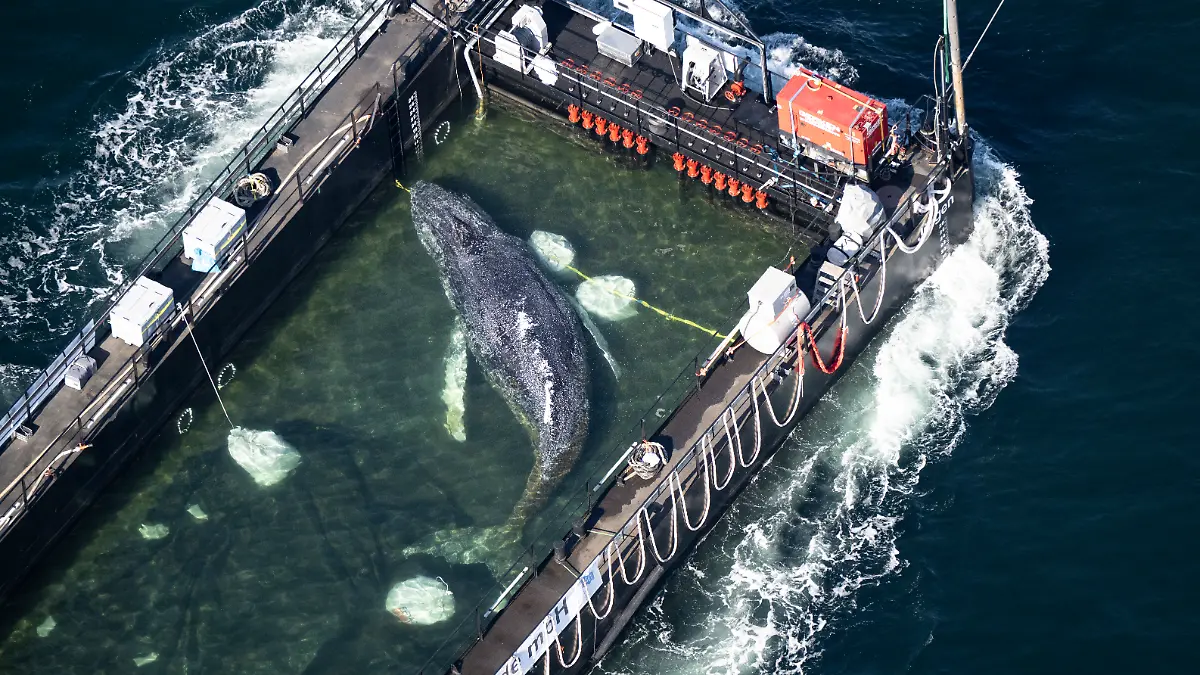
“This is a wild animal”Timmy's singing provides hope – but whale experts warn
For weeks it wasn't just Germany that was rooting for the stranded Timmy.
The humpback whale is currently being brought towards freedom on a special barge. This happened suddenly on Wednesday night Hear Timmy singing. But while many see this as a good sign, marine biologist Lisa Klemens from the German Oceanographic Museum is skeptical, as she explains in an RTL interview.
Suddenly Timmy makes noises – but what kind?
Many people have been confident since last night: Timmy's singing can suddenly be heard from the barge – deep, drawn-out tones that echo through the darkness. But this is not a sign that the humpback whale is calling for its family, explains Klemens. “What you have to remember is that baleen whales make noises when they breathe.” It is unlikely that Timmy will actually sing in the narrow barge.
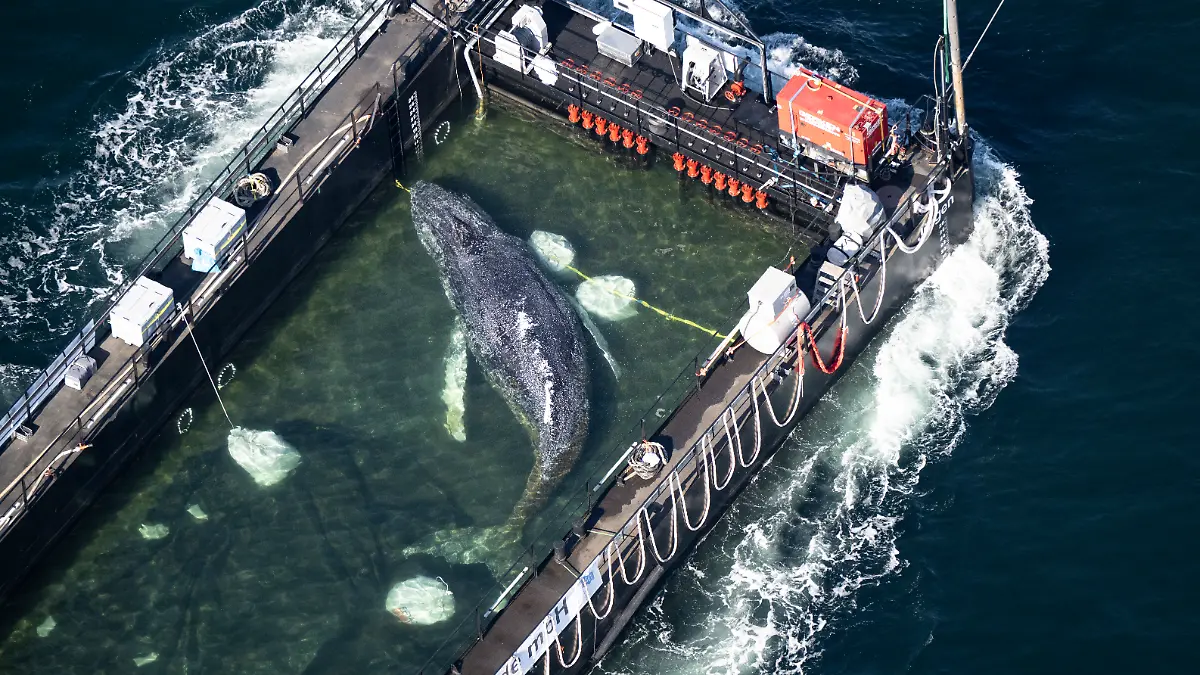
The whale was lying in a flooded cargo ship just before the Danish border on Wednesday morning (photographed from an airplane). The humpback whale, recovered from a shallow bay off Wismar, is transported towards the North Sea. The marine mammal had previously been stuck in the bay of the island of Poel for four weeks.
picture alliance/dpa
Reading tip: After Poel’s whale miracle – what’s next for Timmy?
Video tip: Dramatic whale rescue! THESE tones from Timmy give you goosebumps
“These animals actually only sing in their mating areas. That is, to attract females that are practically capable of reproduction or to practically drive away male competitors,” says the marine biologist. “I would be very surprised if this animal sang in such a situation.”
After all, the rescue operation for the humpback whale is an enormously stressful situation. “This is a wild animal that is used to open water. This animal doesn't like small spaces or boundaries.” In addition, it is very loud around Timmy and the whale is not familiar with these noises – or has had more negative than positive experiences, explains the marine biologist.

Recommendations from our partners
“The animal lay partially on its organs for 30 days”
That is why Klemens and other experts from the German Oceanographic Museum are extremely critical of the attempt by the private rescue initiative and strongly warn against dumping the humpback whale in the open sea. The procedure poses, among other things, the risk of the marine mammal drowning. But that's not all.
“The chances of survival for the humpback whale are difficult to estimate,” explains the marine biologist. When the whale appeared in the Baltic Sea, it was already in poor nutritional condition. “Plus the condition of the skin looked significantly worse.” The multiple strandings have further weakened the whale, which weighs several tons, said Klemens. “The animal lay partially on its organs for 30 days. This will most likely have already caused damage.”
Whether one can really speak of a rescue remains to be seen, says the marine biologist. This can only be said when he moves independently and permanently on his usual route in the North Atlantic, eats independently and his health improves.
German Maritime Museum demands documentation
The German Maritime Museum is demanding complete documentation of the coming events. It is said that the data from the transmitter on the animal must be made publicly available in real time. Live video footage of the whale during transport and release is important in order to gain experience for future rescues.
The private rescue initiative had announced that it wanted to release the whale in the North Sea. The transport of the marine mammal, which is around twelve meters long and weighs around twelve tonnes, is currently in Danish waters on the way to the North Sea. He lies in a water-filled cargo ship that is towed by the multi-purpose ship “Fortuna B”.
Sources used: dpa, own RTL research