ruth901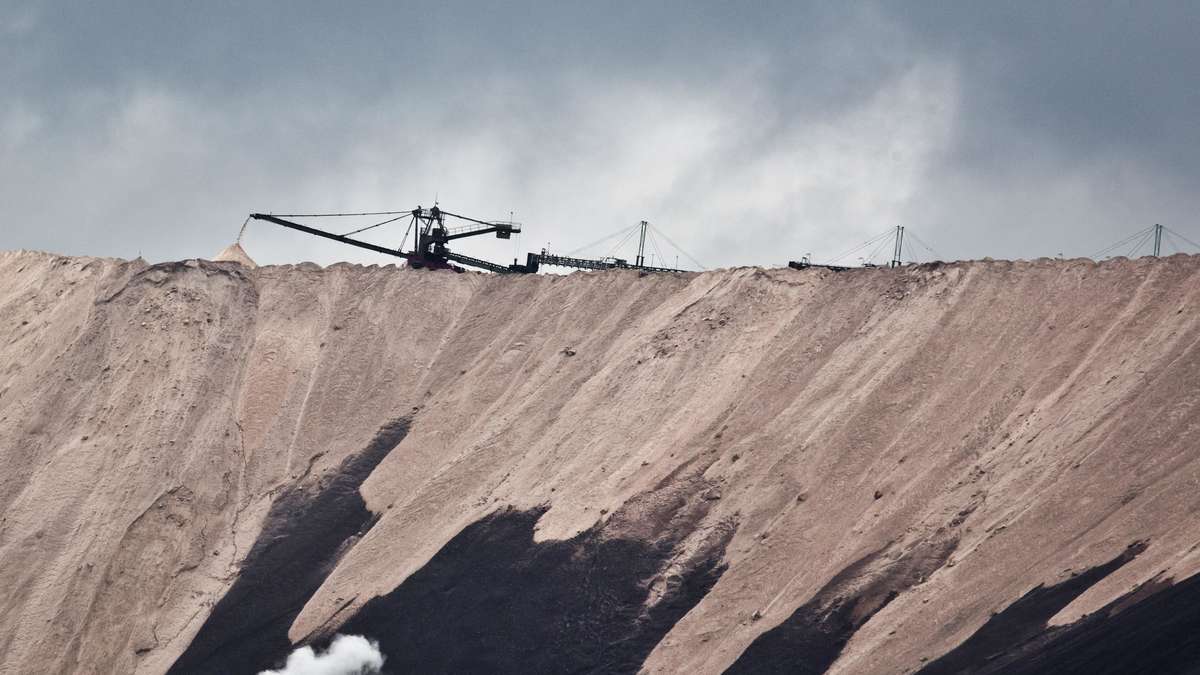

The current analysis of the situation at Kaliberg was recently presented at the round table in Neuhof. It was the committee's first meeting after a break of more than six months.
Neuhof – What is the status of the saline wastewater at the Kaliberg in Neuhof? Over the past few months, the Technical University (TU) of Freiberg has been addressing this question under the leadership of Dr. Traugott Scheytt deals with it. The inventory analysis was commissioned by the Round Table. “The round table has now taken note of the results of this comprehensive analysis,” reports the moderator of the format, Dr. Martin Hein, our newspaper.
The analysis is likely to be of some interest to those involved because it deals, among other things, with groundwater supply – a topic on which the company Kali+Salz and the citizens' initiative (BI) “Umwelt Neuhof” recently disagreed.
Inventory analysis of Kaliberg in Neuhof is available to the round table
The BI sees the groundwater supply in Neuhof at risk due to the salinization around the Kaliberg. It relies on a report by the qualified geologist Dr. Dr., commissioned by the BI. Ralf Erhard Krupp. Among other things, Krupp comes to the conclusion that Salinization continues to spread around the Kaliberg and will increase in intensity. “The salt input into the groundwater only reaches its maximum at the end of the heap's service life. So we are only at the beginning of this development,” Krupp said and warned: “The deep wells are in the same aquifer. It is quite likely that the salt will spread so far that it will break through into the wells. Therefore, there is an acute need for action.”
K+S had contradicted this representation. According to K+S, the data from the groundwater measuring points and the additional geoelectrical measurements of the subsoil provide no indication that drinking water wells are endangered by the dump. According to the company, areas influenced by salt water can be clearly delineated through measurements and are consistent with the expected behavior of groundwater. The Kassel regional council had also stated that there was currently no evidence of a threat to drinking water production.
What do the TU results say? “According to the TU's analysis, the groundwater supply is currently not at risk,” says Hein, but at the same time restricts: “The existing analysis only deals with the current situation. Mr. Krupp's report also draws conclusions for the future, which are controversial and which have caused considerable unrest.” And he also says: “The fact that the supply is currently not at risk does not mean that the source areas are not at risk. It is obvious that the saline seepage water is spreading.”
In the past few months, the different positions of K+S and BI had become increasingly obvious. The differences finally culminated in a scandal at the end of August when K+S stayed away from the round table meeting. The format was then paused until the most recent meeting in March, while K+S, the BI and the Neuhof community met in a small group. When asked, Hein describes the mood at the first meeting after the break as “happy Easter”.
Moderator gives hope for results at the end of the year
During the next meeting, scheduled for April 22nd, Krupp is expected to present his report to the round table. According to the moderator, it is then a matter of superimposing both the existing analysis and the report and identifying similarities and deviations. “Then we will have to gradually see what conclusions we can draw from the scientific findings. It has become clear that dismantling the heap underground is not an option for K+S. However, partial dismantling is not ruled out.”
Hein expresses the hope of being able to present results by the end of the year. There is no fixed deadline, however. “But at some point we have to get down to business. We have been dealing with the topic every month for almost three years. Now we are moving out of the analysis stage and have to say what is feasible.”