ruth901
No ceasefireIran rejects ceasefire and insists on ending sanctions
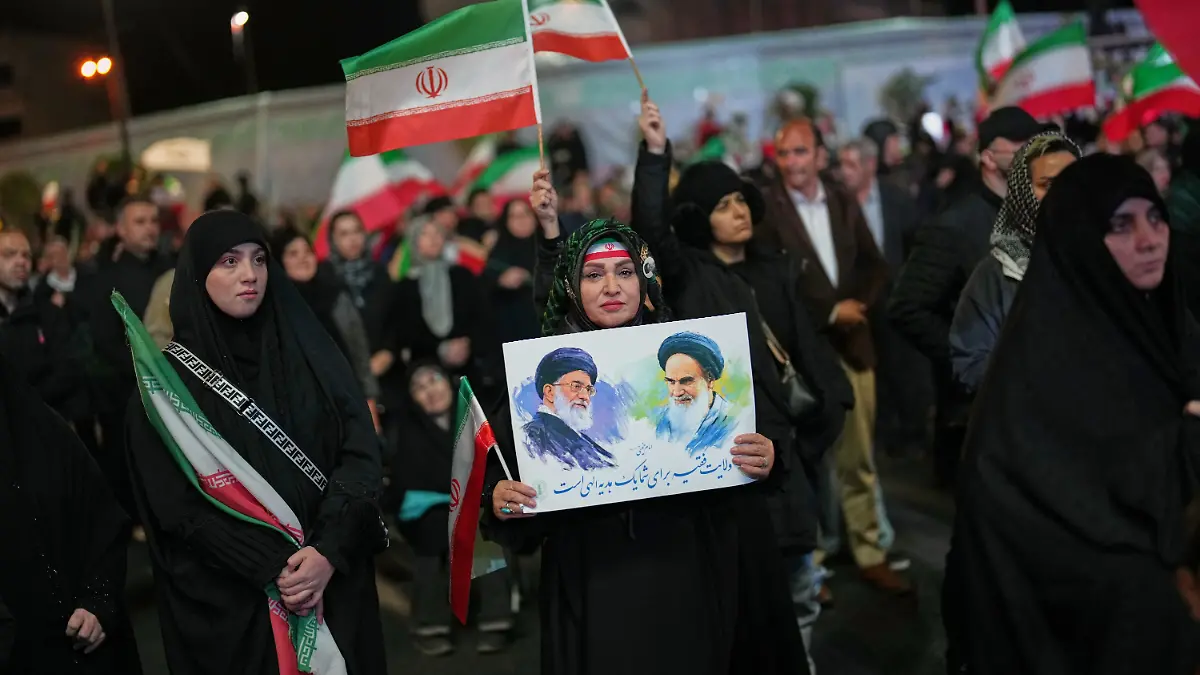
Participants of a pro-government meeting in Tehran.
picture alliance/dpa/AP / Francisco Seco
The government in Tehran rejects the US proposal for a ceasefire and is drawing up its own peace plan with demands. Donald Trump speaks of a “significant proposal”, but does not extend the deadline for an agreement.
Iran's leadership has rejected a proposal for a ceasefire in the Iran war after “two weeks of comprehensive reviews at the highest levels,” Iranian state news agency Irna reported on Easter Monday. Iran has sent Pakistan its response to the US proposal to end the war.
The US news portal “Axios” had previously reported that the USA and Iran were negotiating the conditions for a possible 45-day ceasefire with the mediation of Pakistan, Egypt and Turkey. According to Iranian state media, the Islamic Republic is insisting on its own demands – including a “protocol for safe passage through the Strait of Hormuz” and the lifting of sanctions. Despite rejecting the ceasefire, the Iranian regime stressed the need to “achieve a permanent end to the war that respects its own considerations.”
US President Donald Trump rejected Iran's latest proposal for an agreement as inadequate and insisted on its deadline: “You have made a proposal – and it is a significant proposal,” Trump said on the sidelines of an Easter event at the White House. Although this is an important step, it is not enough. The US President further explained that the war could end very quickly if the leadership in Tehran met the necessary conditions. He assumes that Iran is negotiating in good faith. Trump had previously given the government in Tehran an ultimatum until Tuesday evening (local time) to reach an agreement in the Middle East conflict.
The US President described the deadline he had set as final. When asked by a reporter “Do you want to continue the war?” said the President, “You’ll see.” Trump had previously threatened to destroy power plants and bridges in Iran if Tehran did not open the Strait of Hormuz by the deadline. Since the start of the Iran war at the end of February, the Strait of Hormuz, through which around a fifth of the world's oil and liquid gas transport passes, has been largely closed by the Iranian military.
Sources used: bho/dpa/rts/AFP