ruth901
Be careful when it rains and is wet!Dangerous electricity in the garden – this is how you protect yourself from nasty accidents
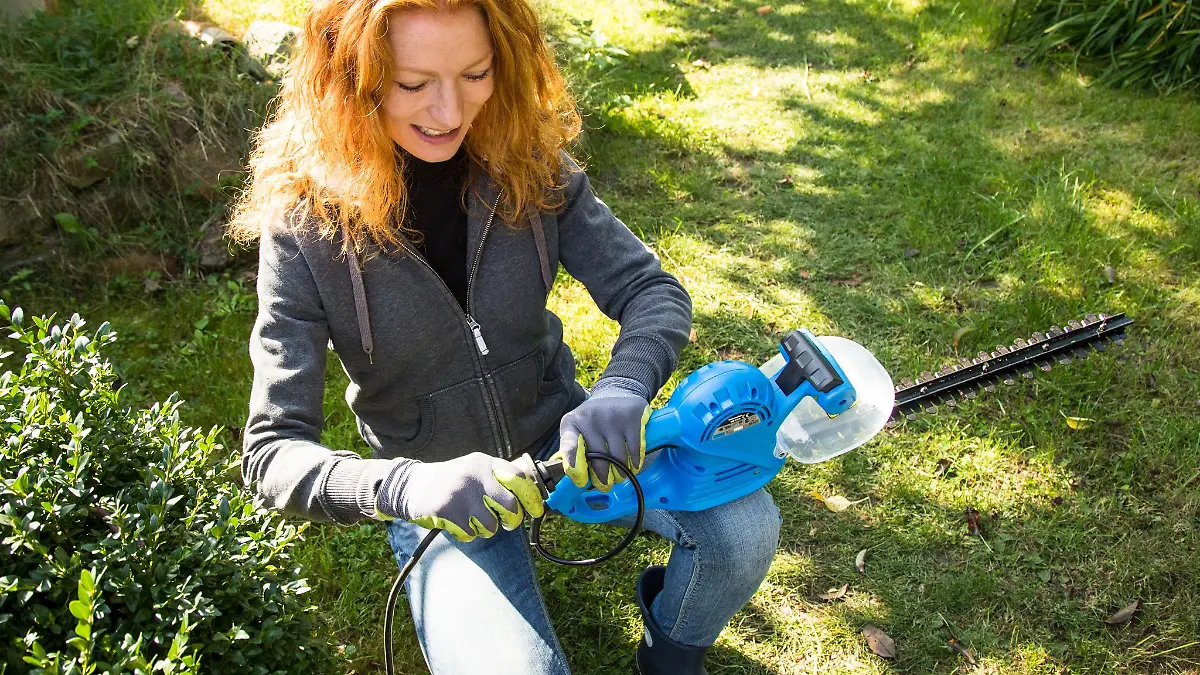
Mow and cut safely: Electrical devices in the garden should only be used in dry conditions (symbol image)
Christin Klose
Gardening often means sweat and electricity flow. You can read here how the latter can be done as safely as possible – and what you can pay attention to to prevent electrical accidents outside.
Mow the lawn, turn on the electric hedge trimmer: a power cable is sometimes necessary for this. But electricity in the garden can be associated with the risk of accidents – especially when moisture and electrical devices come together. The Safe House (DSH) campaign points this out.
Wet ground, rain or irrigation water increase the risk of electric shock. Electrical devices should therefore only be used in the garden in dry conditions.
And even if there are not enough sockets for your projects in the garden, the following applies: you should not use multiple sockets from the interior here. Several extension cables connected in series are also not a good improvisation idea. According to the DSH, they can be dangerous.
The campaign advises only using cables approved for outdoor use in the garden. They can be identified by their respective protection class. Their code begins with the letters IP, which stands for International Protection, as Stiftung Warentest explains. Then follow two numbers: The first describes the protection against the ingress of solid foreign bodies, the second against water.
According to DSH, protection class IP 44 would be suitable for outdoor use.
If you take over an older garden, you should also have the electrical installation there checked – and see whether the residual current circuit breaker (FI circuit breaker or RCD, from Residual Current Device) is outdated or even exists at all. Such FI circuit breakers are installed in the distribution box and have also had to protect outdoor systems since 1984: They monitor whether the same amount of current flows back as previously flowed into a device. If there is a difference, for example due to a broken cable or contact with water, the device disconnects the circuit.
According to the DSH, there is no immediate obligation to retrofit older systems – unless sockets or cables in the garden are significantly renewed or expanded. The campaign still recommends retrofitting. An electric shock cannot always be prevented using FI circuit breakers. However, its duration is shortened so much that serious consequences can often be avoided.
Mobile FI adapters can help with older installations. They come between the device plug and the socket.
Sources used: awi/dpa