ruth901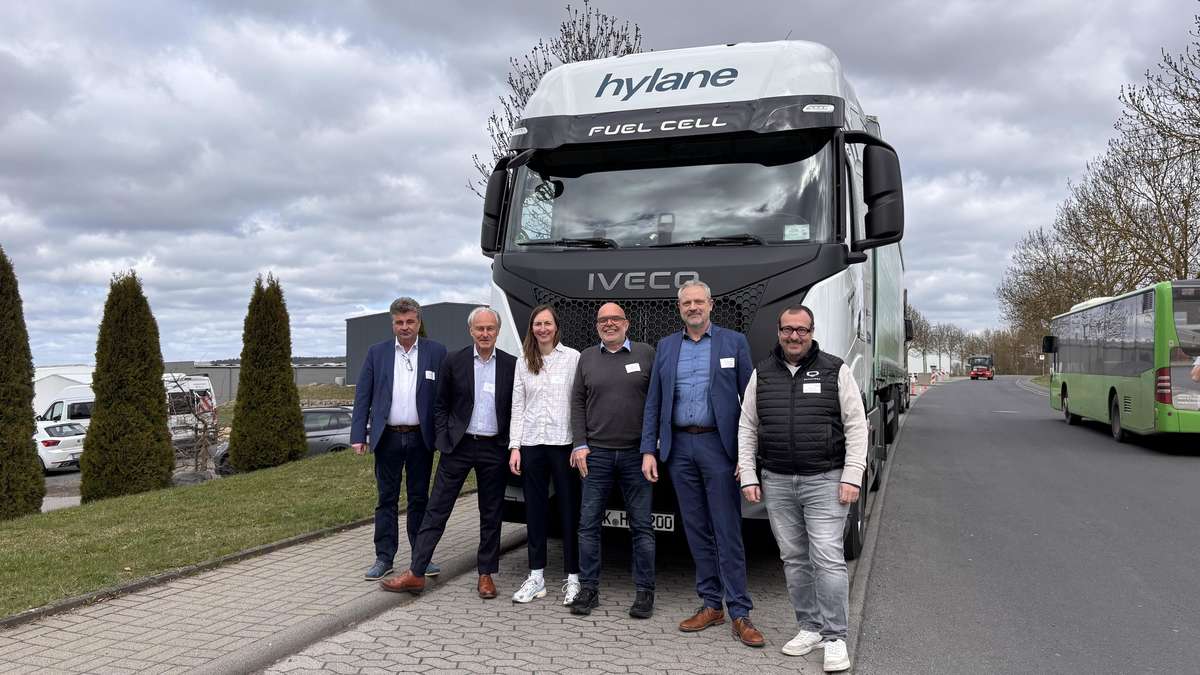

The HyWheels event “Hydrogen Update – Funding, TCO and Technology” focused on how economical and practical hydrogen trucks already are today.
Fulda – Rising diesel prices have been leading to more and more freight forwarders looking for alternative drive concepts for weeks. In addition to battery-electric trucks, hydrogen-powered tractors are also increasingly coming into focus. In order to give interested parties insights into funding opportunities, technology and operating costs and to get more H2 trucks on the road, the HyWheels cluster invited people to the event in the Fulda Technology Park. Experts from industry and funding policy presented technologies, cost comparisons and funding programs.
High diesel prices: Is the hydrogen truck now the solution?
According to HyWheels managing director Christoph Burkard, the hydrogen truck is already worthwhile today. “If you take the pure operating costs, fuel cell trucks are already comparable to diesel. The diesel truck now costs 65 euros with a consumption of 30 liters per 100 km. The fuel cell truck consumes eight kilograms of hydrogen per 100 kilometers, whereby at a price of 8 euros per kilogram of hydrogen, costs amount to 64 euros,” explains Burkard, and adds: “The refueling times at a gas station are 15 minutes. They also have a higher payload than their purely electric counterparts.”
Carsten Beyer from the National Organization for Change in Mobility (NOW GmbH) explained the key points of the Federal Ministry of Transport's funding program. Approximately 80 percent of the additional costs incurred compared to purchasing a diesel truck are eligible for funding. Moritz Schneider from Abo-Energy, the operating company of the hydrogen filling station for trucks in Michelsrombachintroduced this. “The filling station can be used by trucks and buses and has been in operation since July,” he says. Green hydrogen is sold in very high quality. Currently around two to three trucks come there every day to refuel. It would even be possible to supply around 40 to 50 vehicles.

Various manufacturers then presented their trucks with different technologies. Hyundai relies on fuel cell technology in its vehicles. Stefan Dietz, Key Account Manager, emphasized the importance of different forms of drive: “Stay open to technology. We can't do it with just one technology,” he said, referring to purely electric trucks.
Andreas Haller, managing director of Quantron, which produces buses and various hydrogen-powered trucks, also spoke out in favor of a technology-open approach and pointed to the possible CO₂ savings through hydrogen drives. Quantron also uses a fuel cell to power the vehicles.

Jürgen Nadler spoke for the Keyou company. In contrast to previous companies, Keyou relies on a hydrogen combustion engine. “The problem is not the combustion engine, but the fuel. If you replace that, everything is actually there,” he said.
Hans-Joachim Schulz, planning engineer at Bosch, also sees hydrogen as an important future technology: “At Bosch, we are convinced that hydrogen will become an important pillar in mobility in the future.” Before the listeners were able to experience hydrogen trucks for themselves during test drives, Lena Maier from the fuel cell engineering office EMCEL gave an insight into so-called sample TCO calculations, i.e. the total costs of diesel and hydrogen trucks over the entire operating period.