ruth901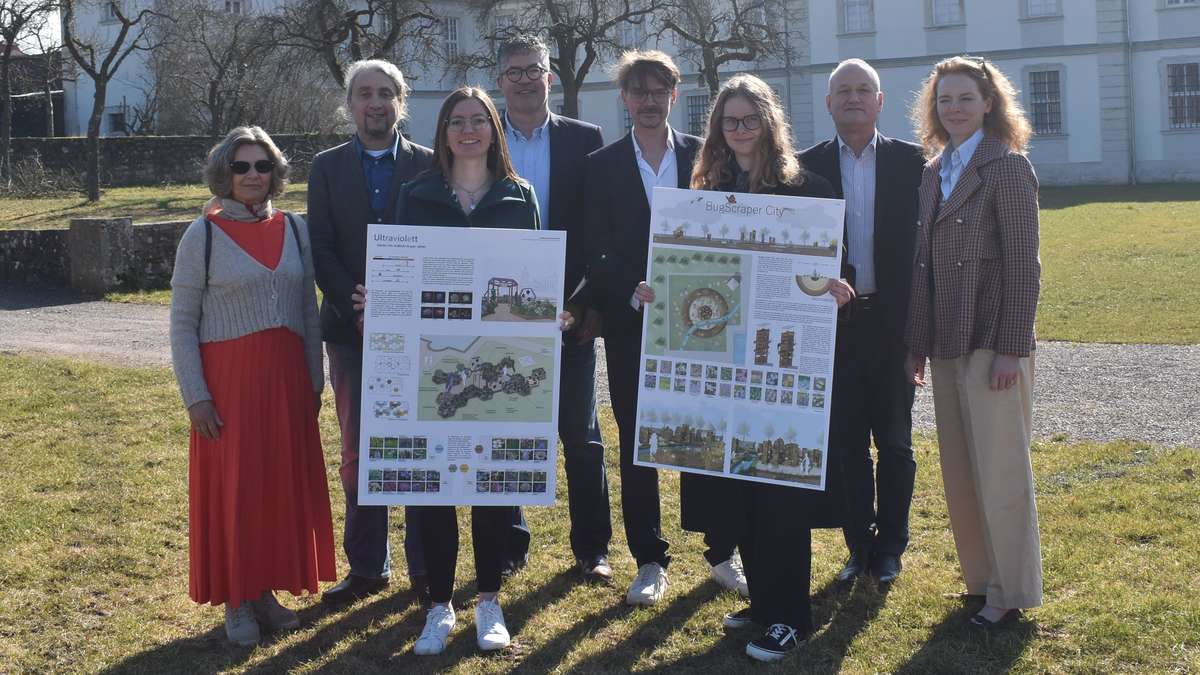

“Ultraviolet” and “Bug-Scraper City” – these are the titles of the two winning designs in this year’s show garden competition for the Princely Garden Festival. The winners were announced on Wednesday at Fasanerie Castle.
Pheasantry – The jury viewed 22 entries from nine universities in the 18th show garden competition. “In the end, we looked intensively at two suggestions,” reported museum director Dr. Markus Miller and the editor-in-chief of Gartenpraxis magazine, Martin Staffler. “Gardens full of life – flying diversity” was the motto this year.
Show garden winner lets visitors see the garden through the eyes of insects
“Our goal is to put the living gardens in the foreground,” emphasized Garden festival patron Floria Landgravine of Hesse. On the one hand, this fits with the garden festival on whose grounds the winning design is implemented, and on the other hand with the time. “I just learned in an article that the number of sparrows is declining sharply because they lack habitat,” said the Landgravine. This makes it all the more important to fascinate and inspire people with gardens “so that we can live gardens and preserve diversity”.
Visitors to the show garden should experience “Ultraviolet” through the eyes of insects during the Princely Garden Festival. In her concept, winner Madleen Herbold, who studies landscape architecture in Höxter, laid out the garden in a honeycomb shape. She always thought about how garden ideas could be implemented in unconventional ways. That’s what makes the professional field so interesting. “I can't say how long I sat on my design. Thoughts kept coming to me every now and then – in the car, in the shower,” reports the trained landscape gardener.

Ultimately, their thoughts were worthy of first place for the jury. Laudator Staffler emphasized: The Ultraviolet design makes it possible to see the garden with different eyes. “It’s about the future, climate and insects – we find all of that here.” Water, clay, rock and sand form the basic elements. This has been consistently implemented in the honeycomb-shaped facility, which is characterized by sustainability ideas and breeding space options for insects, such as wild bees. “Frames with UV photographs show insects' different view of the world. We're hoping for an aha effect,” said Staffler.
Using a concave mirror in a pavilion in the center of the garden, the use and diversity of plants can be recorded. “The question for the jury was: does the plant concept work? Because it has to work in its violet tones in the short period of time of the garden festival,” explained the Gartenpraxis editor-in-chief.
The garden festival jury did not have an easy task
Ultimately, Herbold's design convinced the jury a little more than the idea from Vivienne Eckert, Victoria Taute and Larissa Kröhling from the Erfurt University of Applied Sciences. Their concept takes up the basic idea of a big city with high-rise buildings. “The garden is made up of concentric circles, in the center of which are not skyscrapers but beetle scrapers: towers made of boxes that are decoratively and insect-friendly planted. The outer circles also represent habitats for insects – including an integrated river,” is how museum director Dr. Markus Miller created the “Bug-Scraper City” design, which was awarded the special prize from the Herbert Heise Foundation.
In addition to patron Floria Landgräfin von Hessen, Miller and Staffler, the jury also included the chairwoman of the German Society for Garden Art and Landscape Culture (DGGL), Petra Hirsch Last year's winner Vivien KeilDr. Simon Germann from the TU Darmstadt, Matthias Scherbaum, managing director of the August Fichter gardening and landscaping company, and Ralf Habermann from the Association of German Landscape Architects (BDLA).