ruth901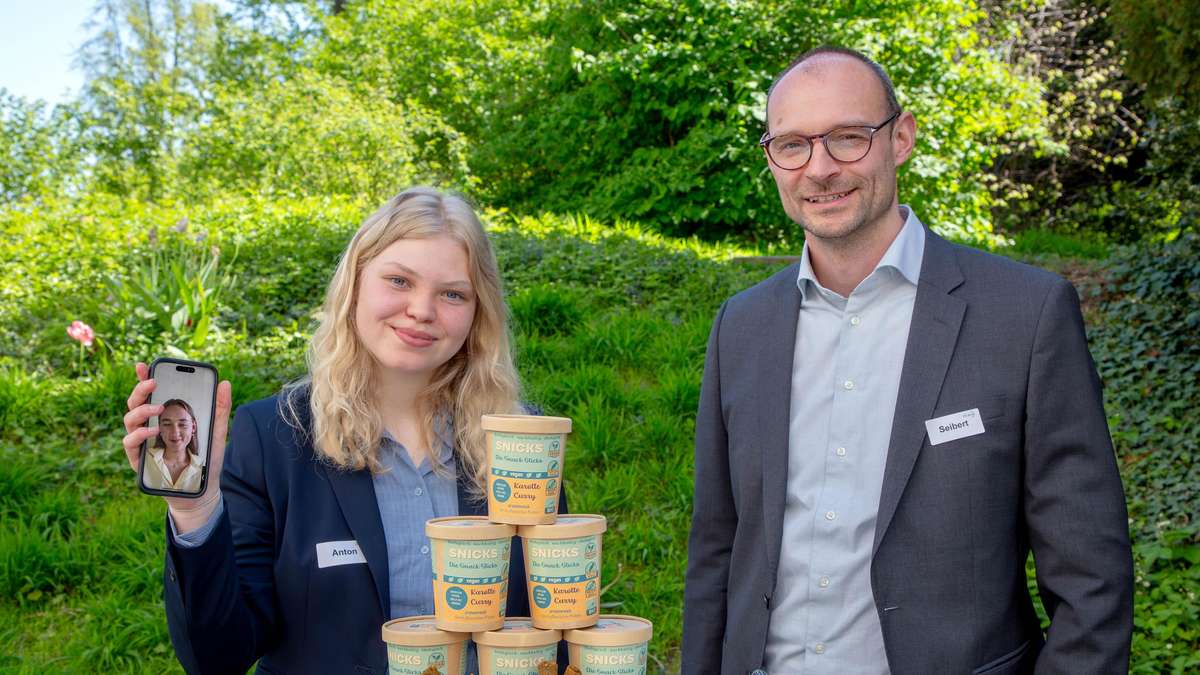

Two students from Fulda University have developed an innovative snack. He uses by-products and impresses in the Trophelia competition.
Fulda – Fulda University of Applied Sciences announced in a press release that two aspiring food technologists from Fulda achieved second place in the Trophelia Germany 2026 innovation competition with their product “Snicks” – a combination of “snack” and “sticks”.
Anne Anton and Annabelle Lauterbach, both 21 years old, developed a snack that contains caffeine, proteins and vegetables and uses by-products from beverage production. “Snicks” was created in the “New Products for the Future” study module in the food technology department at Fulda University.
Sustainability and enjoyment: Innovative snack from Fulda
The students should develop an innovative, sustainable and marketable food. Professor Dr. Philipp Seibert, who oversaw the development, emphasizes: “It’s not just the degree of innovation that matters, but also whether the product can actually be implemented.” The recipe is based on soy flour, gluten and carrots.
One serving contains approximately one organic carrot and carrot greens as well as other vegetables such as onions and leeks. “That's two handfuls of vegetables per serving. One pack covers two of the five vegetable portions recommended as a daily portion by the German Nutrition Society (DGE).”
Background: Trophelia innovation competition
The Trophelia competition is considered one of the most important German competitions for food innovations from universities and is organized by the FEI, the food industry research group. “We are looking for the best ideas for innovative food products that are not only convincing from a nutritional point of view, but also from an ecological point of view.”
The product is particularly environmentally friendly because it uses Guayusa pomace, a caffeinated by-product of beverage production that is usually discarded. The pomace is further processed to obtain a caffeine-containing solution, which is integrated into the sticks. This extends the life cycle of the tea leaf, which comes from South America.
“Snicks” is intended as a snack for nutrition-conscious consumers and does not contain any added sugar. It provides plant-based protein and fiber and offers a gentle source of energy as an alternative to sweetened energy drinks or coffee. The students value regional ingredients. A regional organic beverage manufacturer provided the Guayusa pomace.
Product durability is still being worked on
The organic carrots for the prototype come from the supermarket, but could also be supplied by a local producer. “It’s not just important to us to develop a plant-based product. We also want to strengthen the region and use regional raw materials and value chains,” explain the award winners.
Professor Seibert emphasizes: “The fact that it came in second place is a great confirmation of the innovative strength that we have with the students here in the region.” However, the university cannot act as a producer itself. “As a university, we cannot act as producers ourselves. We provide ideas that we can only implement together with food manufacturers.”
The recipe offers potential for further product variants in the future. Although the shelf life of the product still needs to be worked on, “Snicks” would already be conceivable as a fresh product. However, in order to bring the innovation to market, the team needs practical partners. Last were Two graduates of the university were honored for their theses been.