ruth901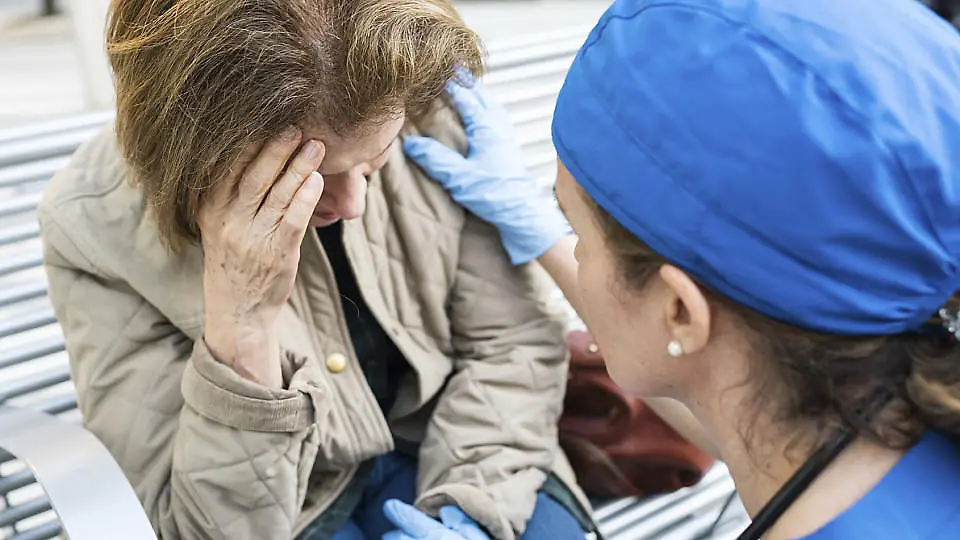
When you have a stroke, every minute countsHow to recognize stroke symptoms with the FAST test
When treating a stroke, every minute counts!
Because it is not always immediately recognizable as such. With the so-called FAST test you can quickly find out whether someone has had a stroke. In the video we show you how the test works.
This is how the FAST test works
The abbreviation FAST stands for the four terms Face, Arms, Speech and Time.
Face: Ask the person concerned to smile. If you notice that she is visibly having a hard time or that her facial features are shifting and the corners of her mouth are hanging down, be sure to call her immediately 112 to!
Arms: Ask the affected person to lift both arms at the same time and stretch them straight away from the body. If that doesn't work, you should call 112 immediately.
Speech: Have the person concerned repeat a simple sentence. For example: “I’m going to have a coffee now.” Stroke patients often only utter unintelligible gibberish, suddenly stop in the middle of even short sentences or become very unclear. This is also a sure sign of a stroke.
Time: Every minute counts. If just one of these simple exercises takes longer than five seconds, call the emergency number 112 immediately. This number is valid throughout Europe! When you call the fire department control center, the suspected stroke is clarified with just a few precise questions. If the ambulance does come for free, you don't have to worry about any consequences. It's better to call once too often than once too little.
Reading tip: Recognize warning signs early: You need to pay attention to these 12 stroke symptoms
What do you do until the rescue workers get there?
On average, rescue workers are on site in nine minutes. Until then, under no circumstances should you give the person affected anything to eat or drink. The symptoms of paralysis could lead to difficulty swallowing, food runs through the airways into the lungs and can result in severe pneumonia.
-
Under no circumstances should you leave the affected person alone during this phase!
-
If necessary, loosen her clothing and ensure that her upper body is in an elevated position, for example by placing a pillow on her back.
-
If the affected person suffers from vomiting or even becomes unconscious, put them in the stable side position.
-
If an extreme case occurs and you can no longer detect a pulse or breathing, you must begin resuscitation measures immediately.
The arriving emergency doctor will also ask for the following information: What symptoms have occurred? What medications does the patient take regularly? What is the exact time when the first symptoms appear?
Reading tip: From first aid to hospital: what to do if you have a stroke?
Recommendations from our partners
In the video: What happens to the body during a stroke?
But what is a stroke actually? And what exactly happens in the body? We explain this to you in the video.
First aid for stroke
In the event of a stroke, it is important to act quickly because the first few hours determine what subsequent damage those affected may have to live with. If those affected do not receive help quickly enough, the chance of getting through everything without mental and physical damage decreases rapidly. Conversely, quick intervention and prompt medical care can prevent long-term damage.
So if in doubt, call the emergency doctor once too often rather than delaying for too long.