ruth901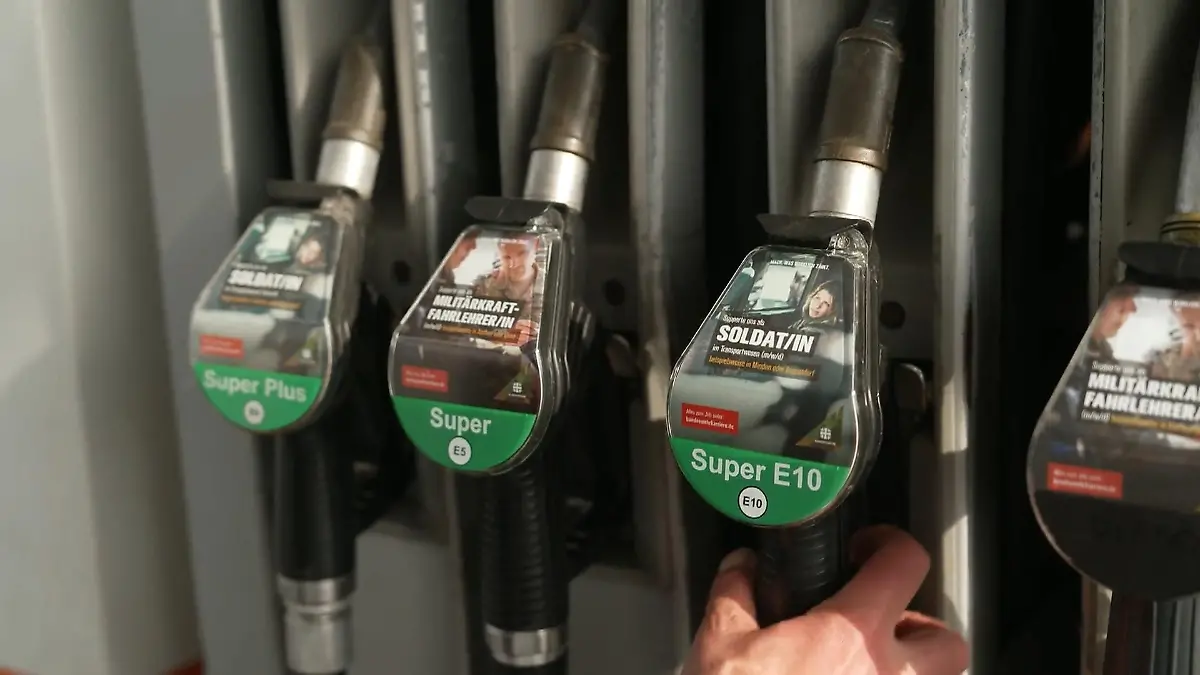
The result blows experts awayThe big gasoline report: Which fuel uses the least?
“If I fill up with E10, it can only break.”
Four test cars, lots of tips – and in the end it is clear how and how you can actually save fuel! Even at the gas station, customers think about whether they should fill up with E5 or E10. But E10 is said to damage the engine. Or not? Driving style also has a major influence on fuel consumption. We clarify all of this in our test.
Fill up with E10? Or would you rather play it safe and stick with E5?
The reputation of the more climate-friendly premium fuel E10 is not the best. The ADAC also knows this. You have been able to fill it up with us since 2011, i.e. for 15 years. “Overall, we know that around 30 percent of drivers fill up with E10, so 70 percent still fill up with normal Super. The strange thing is that almost all cars could actually tolerate E10,” says Fabian Faehrmann, company spokesman for the automobile club.
At the gas station we ask a customer who is currently filling up with E5 why she doesn't use the cheaper E10. Her son talked her out of it. Another woman says: “I think it's just become so ingrained that people assume that if I fill up with E10, it can only break.”
Reading tip: Fuel price brake comes into force! When is the cheapest time to fill up?
We test whether this is really the case with two identical new cars. Automotive expert Sascha Legill accompanies this test and ensures the same conditions in terms of equipment, air pressure and tires before the start. And also the tank. Every little thing can affect consumption. The first difference becomes apparent at the pump: E10 costs 1.97 euros per liter at the time of testing, E5 costs 2.03 euros – so we pay six cents per liter less for the disreputable fuel.
The result also surprises the experts
Our two test cars set off, a distance of around 120 kilometers. First country road, later motorway. Even if you move in the slipstream of another car, you can save up to 20 percent on fuel. But of course the test cars keep enough distance so as not to distort the results.
After they have covered around 120 kilometers of road, expert Sascha Legill compares the two cars in terms of fuel consumption. The car with E5 consumed a total of 6.4 liters over 119.6 kilometers. And what about our comparison car with E10? The expert is also surprised: only six liters of fuel were used. “I actually thought that we had the car here with the higher consumption due to the E10 fuel or higher ethanol alcohol content.”
Reading tip: Green Party leader wants speed limit – because of petrol prices
But he also admits: “I could imagine that the difference comes due to driving situations. Maybe just one more red phase.” The ADAC sees it similarly: “Because E5 and E10 are put together differently, it is mathematically the case that there is minimal additional consumption with E10. Mathematically, it is approximately one percent.”
Recommendations from our partners
The driving style is put to the test
But your own driving style also has a major influence on fuel consumption. Here too, we sent two test cars of the same design onto the road. Even before the departure, driving safety trainer Michael Tück has a tip: “Check tire pressure. Once a month would be good. 14 days would be optimal. But no one does that.” He recommends about 0.2 bar more pressure than specified.
Reading tip: Oil is cheaper, but fuel is barely there – the reasons for the tank trouble!
You can see how this test works with everyday driving style and a slightly adapted fuel-saving model in our video. There we will also tell you whether it is really worth taking an 80 or even 100 kilometer detour to get to a cheaper gas station in the neighboring country.
Sources used: own RTL research