ruth901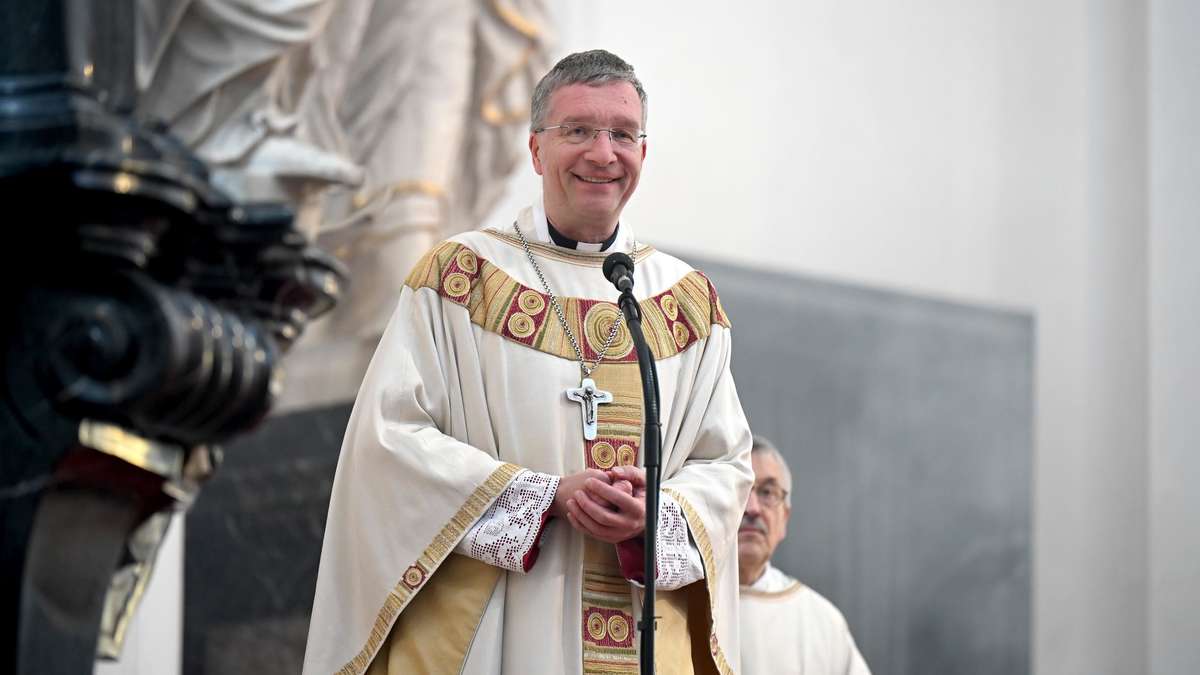

Bishop Gerber interprets Easter in Fulda Cathedral as a personal experience: Resurrection happens where people really meet each other.
Fulda – The resurrection of Jesus is, according to Bishop Dr. Michael Gerber more than the memory of a past event: it happens where people experience each other personally and meet each other in their dignity. The Fulda bishop has that in the pontifical mass on Easter Sunday in Fulda Cathedral emphasizes, as the diocese of Fulda reports.
The focus of his sermon was the encounter between Mary Magdalene and the resurrected Christ at the empty tomb. Maria comes there alone in the early hours of the morning and is confronted with loss, uncertainty and emptiness – experiences that many people are familiar with today, says Gerber.
Easter Sunday in Fulda: Bishop Gerber emphasizes the power of devotion
The decisive turning point occurs at the moment when the Risen Lord calls her by name: “Mary!” In this personal address, she becomes the recipient of a gift that changes her life. Gerber interpreted this scene as the key to the Easter message: Resurrection does not happen in the abstract, but rather when addressed personally. “At its core, our Easter message is a touch,” emphasized the bishop.

At the same time, this experience is inaccessible. Mary could not hold the risen Christ. “Do not hold on to me,” says the Gospel. For Gerber, this points to a basic dimension of faith: the presence of the risen Christ is not available, but is revealed in the encounter. It is therefore not about holding on to security, but rather about embarking on an open path of trust.
Gerber also took up the experiences of the previous days. Already at Easter night he had interpreted the resurrection against the background of darkness, fear and existential borderline experiences. Signs like the Easter fire and the light of the candles mean that new hope is opening up, especially in uncertainty and fragility. The bishop continued this line on Easter Sunday and condensed it into an experience of personal care.

According to him, faith is not exhausted by looking back, but proves itself in the present – where people allow themselves to be touched and meet one another. This also brings us full circle to his pastoral word, in which he emphasized the importance of attention and personal care.
Another service
The Holy Week ends with a pontifical mass on Easter Monday (April 6th) at 10 a.m. with Auxiliary Bishop Karlheinz Diez. The focus of the Gospel of the Emmaus Disciples is on the experience of recognizing Christ anew while traveling together. The Youth Cathedral Choir and organist Deisenroth provide the music for the celebration.
For Gerber, this perspective is also a mission for society. Christian faith shows itself in the fact that people let themselves be touched by the fate of others and take responsibility. Especially in a time when empathy is often seen as a weakness, gain new meaning from the Easter message. It becomes the strength that supports the community. The benchmark remains the inviolable dignity of every human being.
The celebration in Fulda Cathedral was musically provided by the cathedral choir and cathedral orchestra under the direction of cathedral bandmaster Franz-Peter Huber. The performance included Michael Haydn's “Missa Sancti Joannis Nepomuceni”. Cathedral organist Max Deisenroth played the organ.