ruth901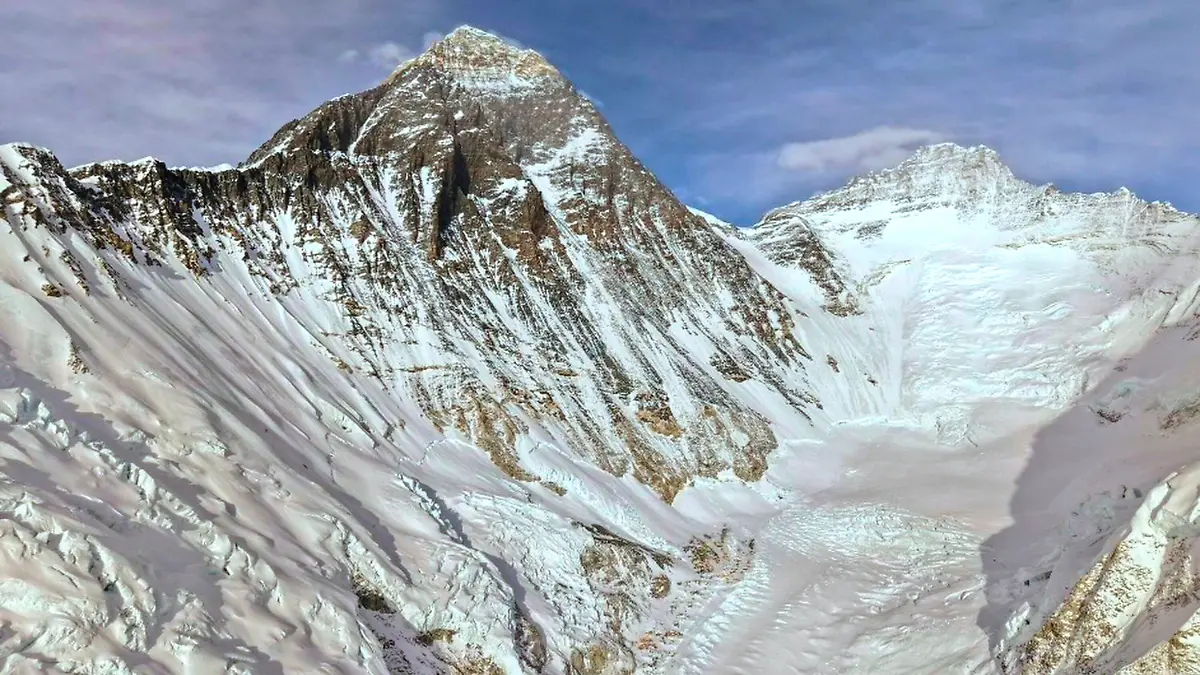
Beat previous record by one hourRunner climbs Mount Everest in under ten hours
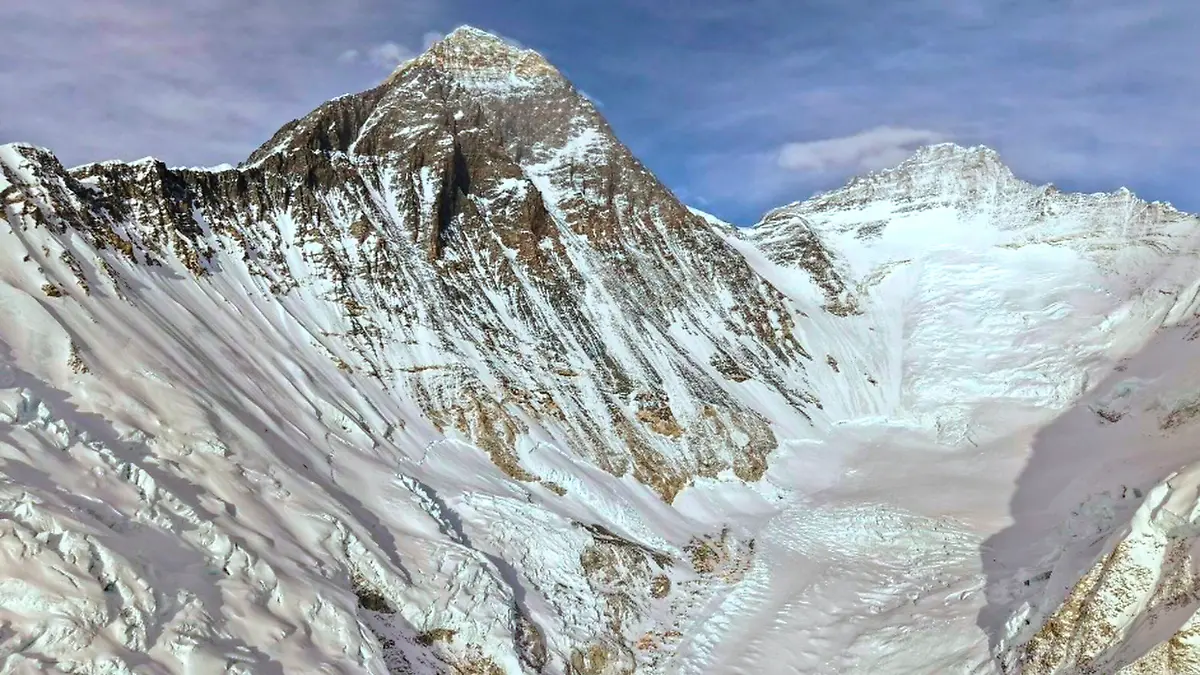
Mount Everest, center left, is visible from base camp in Nepal.
picture alliance/dpa/AP / Pasang Rinzee Sherpa
Record in the death zone.
According to the Internet specialist site ExplorersWeb, US trail runner Tyler Andrews completed the route from base camp to the summit at around 8,850 meters above sea level in less than ten hours. It was said that he had beaten Lakpa Gelu Sherpa's previous record from 2003 by a good hour. The performance attracts attention in the mountaineering scene – but also raises the question of the comparability of such best times.
Most people can do half that in that time
“It is of course a very impressive achievement to climb from the base camp to the summit in this time – even with bottled oxygen,” said Billi Bierling, head of the Himalayan Database archive, to the German Press Agency. “Most people need a similar amount of time just from Camp 4 at 7,950 meters to the summit.” However, a speed record on a mountain using bottled oxygen cannot be compared with a record in a stadium.
Both the altitude at which oxygen was used and the flow rate made a big difference. “I also think that as an athlete you should set such a record without bottled oxygen,” added Bierling, who herself has climbed several eight-thousanders without bottled oxygen. The perceived altitude is reduced greatly with the oxygen, so bottled oxygen is a performance-enhancing agent.
Many factors affect performance
Climbing Everest without that extra oxygen is one of the greatest challenges that only a few people succeed. According to Andrews, he had also tried this several times but had to stop each time.
“I've always been motivated to push my own limits as an athlete, and climbing to the summit in 9:55 hours (and getting back in 16:32 hours) is one of the hardest things I've ever done,” ExplorersWeb quoted the extreme athlete as saying after his return.
Streaming tip: Mount Everest – searching for clues in icy heights on RTL+
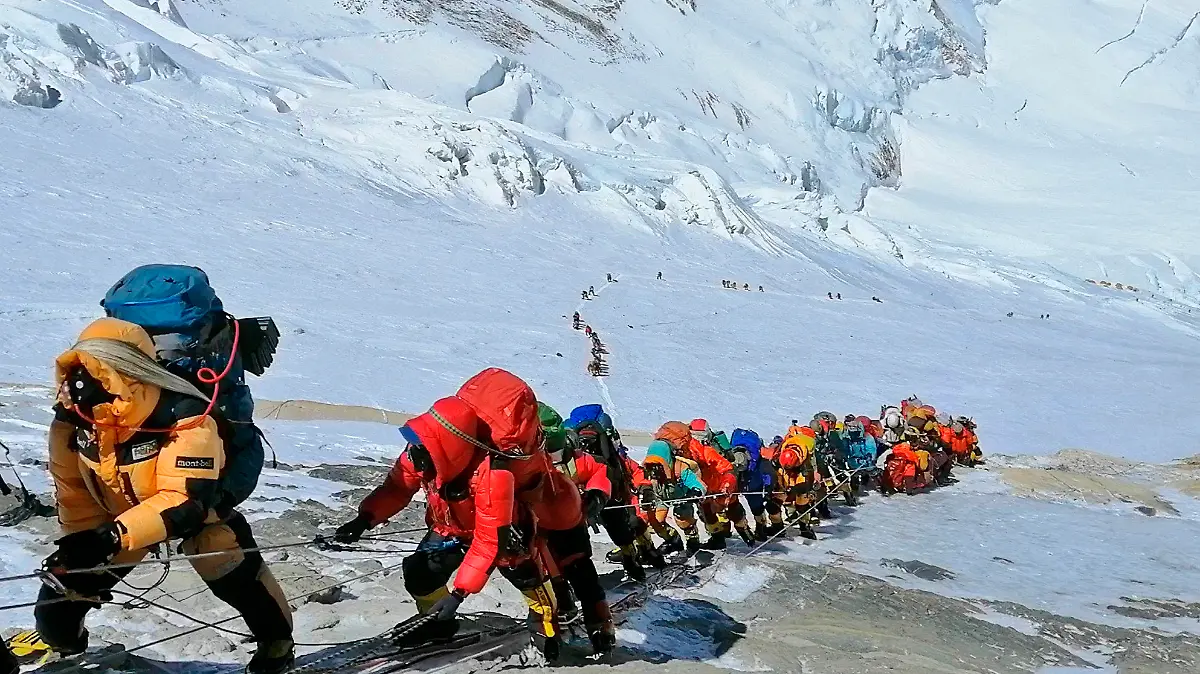
Climbers on Mount Everest
dpa, Rizza Allee
Recommendations from our partners
Himalayan expeditions have been documented since 1960
The Himalayan Database archive has documented as many Himalayan expeditions in Nepal as possible since the 1960s. Bierling said she hasn't spoken to Andrews herself. According to information on ExplorersWeb, he had already used bottled oxygen at a flow rate of four liters per minute from Camp 2 at 6,400 meters. Lhakpa Gelu, who needed almost eleven hours, only used 4 bottled oxygen from camp. The flow rate is not known because the Himalayan Database does not record it, but at that time two or at most three liters per minute was common.
Streaming tip: “Border Crossings”: Listen to Reinhold Messner’s audiobook on RTL+
In addition, the route on the mountain changes every year. Experienced expedition leaders and mountaineers reported to her that the Khumbu icefall in particular was very “fast” this year. Compared to other years, there were significantly fewer ladders and the route was said to be very direct.
Reading tip: Snowstorm drama on Mount Everest! At least 350 people rescued
On Everest, where queues of people push their way to the summit during the peak season, it is now at the end of the season. Andrews may have been largely alone, unblocked by other climbers. “It was different on May 20th. There were 274 people on the move and there were waiting times of up to three hours at the Hillary Step.”
In an exchange with dpa, Bierling also highlighted another top performance of the year: “The most impressive thing I saw this year on Everest was Bartek Ziemski's ski descents from Lhotse and Everest. Bierling also highlighted another top performance of the year in an exchange with dpa: “The most impressive thing I saw this year was Bartek Ziemski's ski descents from Lhotse and Everest, which he climbed alone and without bottled oxygen has.” (cko)
Source used: dpa