ruth901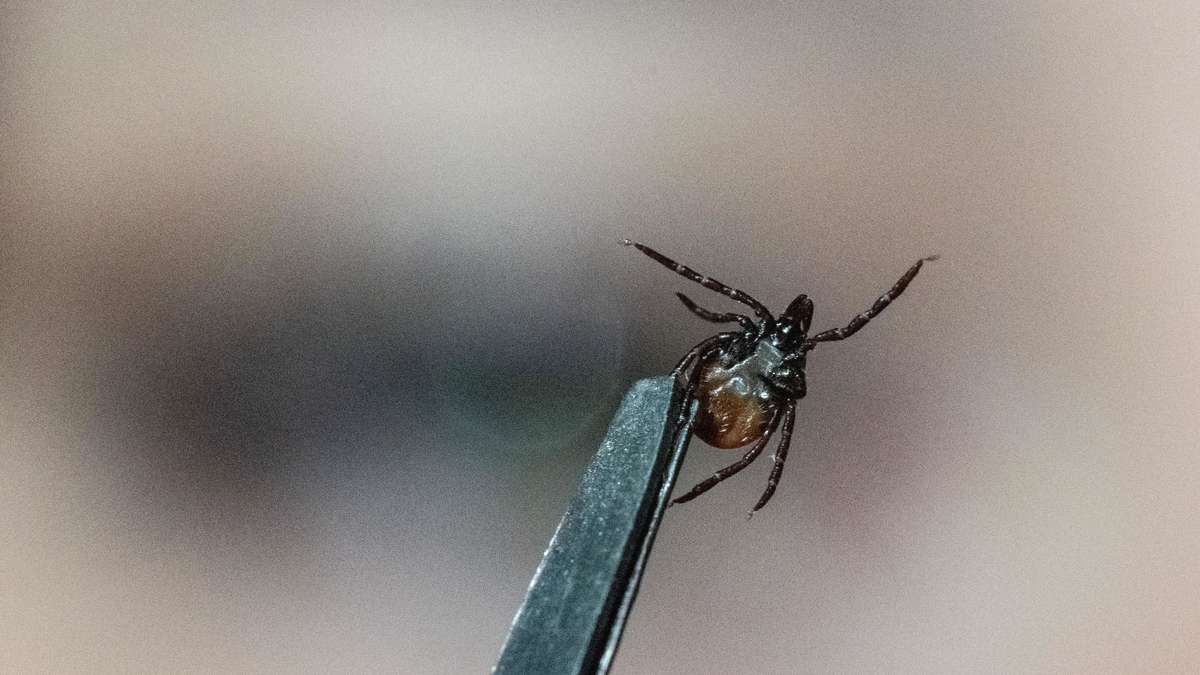
Ticks are continuing to spread in Hesse and, according to experts, are becoming a year-round problem. The TBE risk map could also expand.
Wiesbaden/Fulda – Ticks are among the winners of climate change – and Hesse According to experts, it will no longer get rid of the “tick problem”. As the doctor and tick expert Adela Zatecky explains, the parasites are increasingly spreading in the state because new species are immigrating and local ticks are better able to survive mild winters. “That means we have a tick problem and we’re going to keep it,” says Zatecky.

According to their observations and the information from other experts, tick species that are more commonly known from warmer regions are now appearing in Hesse more and more – such as the alluvial forest tick, also known as the meadow tick, and the sheep tick. “These are ticks that used to hardly exist here,” says Zatecky, who is also the second chairwoman of the Nature Conservation Association (Nabu) Mühlheim and Offenbach. According to the doctor, it is difficult to estimate whether this will increase the overall health risks. For the typical diseases Lyme disease and tick-borne encephalitis (TBE), the local woodbuck is still considered the main vector. The immigrated species could also transmit these diseases – “although probably not quite as effectively,” she says.
No winter break: ticks become a year-round problem
TBE stands for tick-borne encephalitis, an inflammation of the brain and meninges caused by viruses. According to the Hessian Ministry of Health, a total of 25 TBE cases were registered in the state in 2025, compared to ten a year earlier. TBE can also occur outside of the officially designated risk areas. “On average, 0.1 to 5 percent of ticks in TBE risk areas carry TBE viruses,” says the website of the Robert Koch Institute (RKI). Bacterial Lyme disease is much more common than TBE. If left untreated, it can lead to inflammation of the joints, heart muscle and nerves, but can usually be easily treated with antibiotics.
Zatecky cites the consequences of climate change as the main reasons for the increase in ticks. Native species also benefit from the fact that there are hardly any severe frosts anymore. “In the past, when it was a really hard winter, ticks also froze away,” she explains. There is virtually no longer any natural regulation of the population through harsh winters. The ticks' activity phase begins at around eight degrees Celsius. If it becomes milder overall, the time in which the animals can reproduce will be extended. “And this is also why the populations are increasing,” says Zatecky.
According to the expert, the changed conditions also affect the risk assessment. In the past, ticks were primarily a summer problem, but reports of tick-borne diseases are now moving further into the year. “We have to assume that with climate change the tick problem will also become a year-round problem.” She also assumes that in the long term the previous TBE risk areas in southern Hesse, which the RKI identifies and for which there is a vaccination recommendation, will not remain.
According to the expert, there will soon be more TBE risk areas in Hesse
Ten rural and urban districts in Hesse are currently considered TBE risk areas. According to the RKI, these include the cities of Offenbach and Darmstadt as well as the districts of Bergstrasse, Darmstadt-Dieburg, FuldaGroß-Gerau, Main-KinzigMarburg-Biedenkopf, Odenwald and the Offenbach district. “We have not yet identified any risk areas in the north and northeast, but that will come,” says Zatecky.
In order to protect yourself, the doctor advises taking consistent precautions when staying in forests and meadows. “When I go out into nature, it goes without saying that I apply insect repellent,” she says. Anyone who is in a TBE risk area should also get vaccinated – this also applies to people who live in Frankfurt but regularly travel to the Odenwald.
After a trip into nature, the doctor recommends that you take off your clothes in the bathroom rather than in the bedroom. In order to safely remove ticks from textiles, a wash cycle at 60 degrees is necessary. It is also important to carefully examine your body after every time you are outdoors. While TBE viruses are transmitted immediately with the bite, according to Zatecky, the risk of Lyme disease can be significantly reduced if the tick is discovered and removed quickly. (With dpa material)