ruth901
Now Timmy's fate is decidedWhat will become of whale Timmy? These scenarios are a matter of life and death
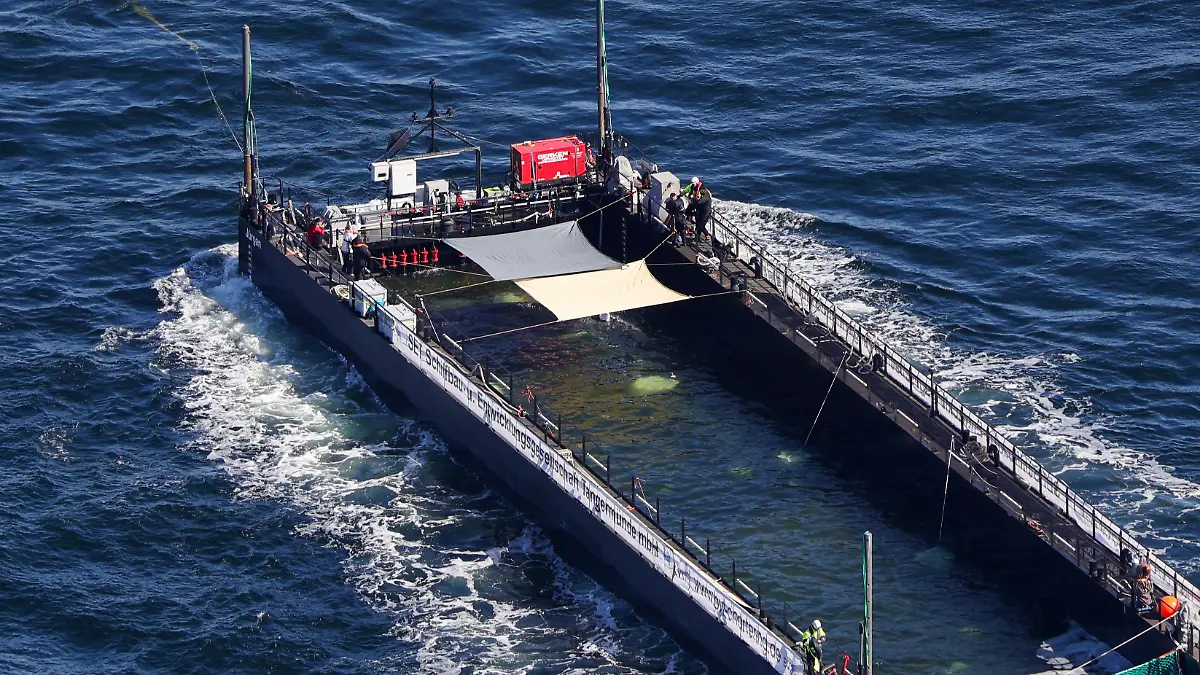
The awnings over the barge protect Timmy's already battered skin from further exposure to the sun during the several-day transport.
Christoph Reichwein/dpa
He is on the way – but is he really saved?
Timmy is currently traveling between Denmark and Sweden. But the hardest part is only now beginning. Will he make it back to freedom? Or will the spectacular rescue end in tragedy?
Review: Weeks full of drama, doubt and hope
The twelve-ton humpback whale has been being towed through the Baltic Sea in a barge since Tuesday evening (April 28). He has now arrived off Denmark. The destination is the North Sea, maybe even the Atlantic. But even the rescuers know: This is an experiment. Mecklenburg-Western Pomerania's Environment Minister Till Backhaus said at the press conference on Wednesday: “It was an attempt and the attempt was successful.” But the decisive moment is yet to come.
Reading tip: Ministers, lawyers and DLRG talk about the rescue operation
At the beginning of March, the humpback whale suddenly appears in the Baltic Sea. Shortly afterwards he gets stranded again and again, there are a total of five documented strandings – first off Timmendorfer Strand, then in the Kirchsee off the island of Poel. Timmy lies in shallow water for weeks. The consequences are dramatic. “The animal lay partially on its organs for 30 days. This will most likely have caused damage”explains marine biologist Lisa Klemens from the German Oceanographic Museum in an RTL interview. The whale also suffers from a skin disease caused by the low salinity of the Baltic Sea, which causes blister-like growths and peeling skin.
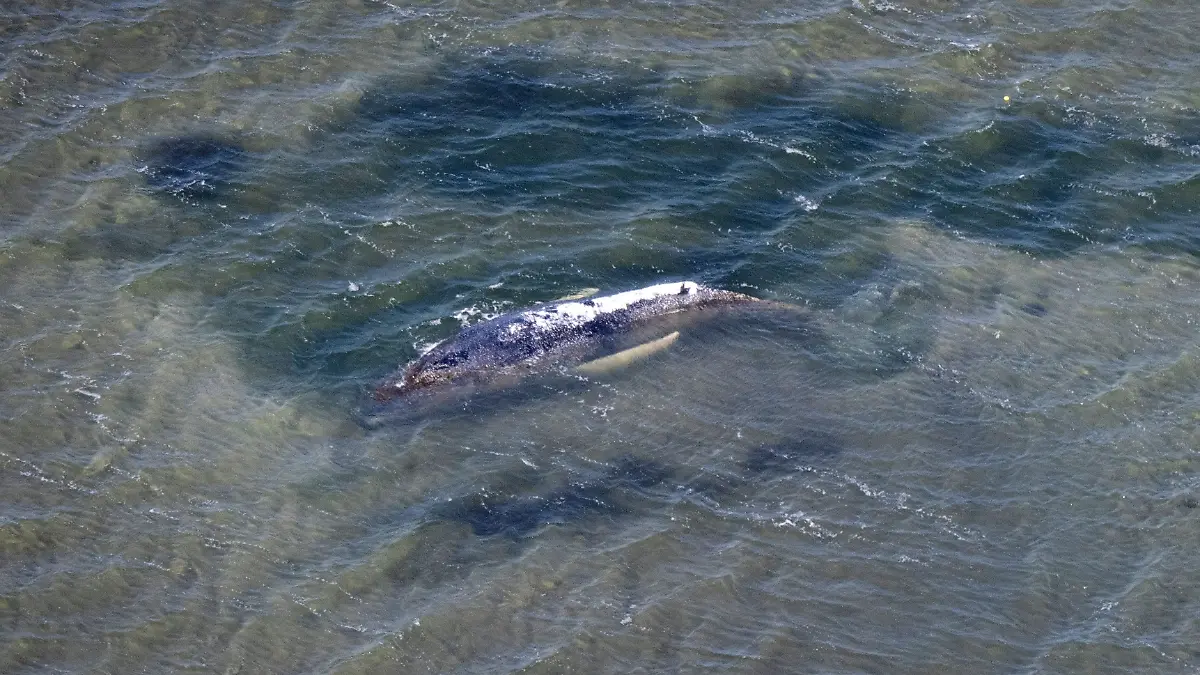
The stranded humpback whale was stuck in the shallow water off the island of Poel for almost 30 days.
Philip Dulian/dpa
Despite all doubts, the spectacular rescue was successful on April 28th: Timmy himself swims into the barge, the special floating pool. But what can happen next for him?
Scenario 1: Death after release
In the North Sea, the barge is supposed to open and release the whale. But this is exactly where experts see a great danger. “If the animal is so weakened and you simply let it out in open water, then of course the risk of drowning is incredibly high,” warns Lisa Klemens. Timmy may no longer have the strength to dive or breathe, and he will lack the opportunity to rest in the open sea. At the same time, he may no longer be able to eat due to his health condition. In addition, searching for food, orientation and escaping from enemies could be too much for him. A weakened whale quickly becomes easy prey.
Reading tip: Timmy's singing provides hope – but whale experts warn
The transport itself is also a risk. “This animal knows no narrow spaces or boundaries,” says Klemens in an interview with RTL. The barge, the engine noise, the vibrations – all of this is extremely stressful for the whale. “Everything that is underwater or in the water is significantly louder than we hear on land.” A risk that no one can calculate precisely. There has never been a comparable operation anywhere in the world.
Recommendations from our partners
Video tip: Humpback whale Timmy sings in his rescue boat
Scenario 2: The last resort in the rescue center?
What if Timmy can't handle the sea? Then a plan B could come into effect. Lawyer Constanze von der Meden and Minister Backhaus talk about possible whale rescue stations. There he could receive medical care and be nursed until he has enough strength for the ocean. But there are many open logistical questions behind the plan. It remains unclear which facility can accommodate a twelve-meter-long humpback whale. Although there are rehabilitation centers in Europe for smaller marine mammals such as porpoises or belugas, there is a lack of experience for an animal of Timmy's size.
Reading tip: After the coma! Timmy vet is paralyzed
Scenario 3: Timmy makes it back to life
The best case scenario: The four to six year old bull survives the transport, is released and swims back into the Atlantic on his own. The hope of the initiative: Timmy will find a herd in the Atlantic that will take him in. But marine biologist Lisa Klemens dampens the euphoria: “Humpback whales are solitary animals. That's why I think it's very unlikely that this animal would join another group of whales outside of the breeding season.” Even in the best case scenario, he is alone at first. And only if he eats again, swims and doesn't get lost again can one really speak of a rescue. “We may have to wait and see before we can really call this a rescue,” said the expert.

The initiative wants to closely monitor what happens to Timmy. A GPS transmitter has already been attached, but it only works on the surface of the water, not underwater. That's why the whale should get a new, better tracker. This should make it clear whether Timmy finds his way. However, the data remains secret. This is to prevent onlookers from following the whale.
Sources used: own RTL research