ruth901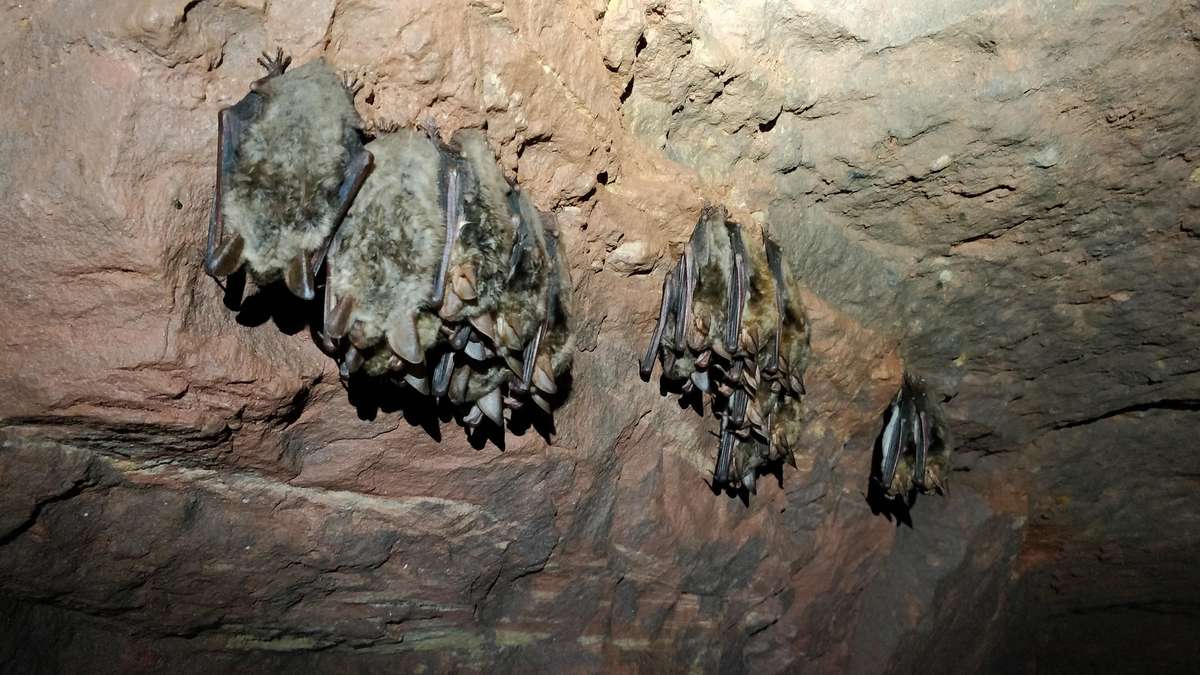

For the first time, experts have counted more than 500 hibernating bats in their winter quarters in the Fulda district. But it's not all good news.
Fulda – Just in time for the opening of the Milseburg Tunnel to cyclists on Friday (April 10th), the Working Group (Arge) for Bat Protection Fulda presented the current results of the annual winter controls. As the Arge reports, The positive upward trend for the pug bat continues clearlywhile several other native species are cause for concern.
For the first time, more than 500 bats are hibernating in the Fulda district
All bats found in Germany are specially protected under nature conservation law and are on the Red List of Mammals Hesse. In the Fulda district, the hibernation numbers of bats have been systematically recorded for 25 years – in rock cellars, mine tunnels, old bunkers, water tanks and so on in the Milseburg Tunnel, which is closed to bicycle traffic during the winter months.
According to the working group, the inspections of the winter quarters are carried out by its members in cooperation with authorities and private individuals, including the Hesse State Association for Cave and Karst Research, NABU and property owners.
“18 bat species are known in the Fulda district, of which 12 bat species use the 45 controlled underground roosts to spend the cold season there,” reports Stefan Zaenker, chairman of the Working Group for Bat Protection in Fulda, who has been organizing winter inspections for years. Last winter, more than 500 animals were counted in these quarters for the first time. The largest known winter quarters are the Milseburg Tunnel with 98 hibernating bats and the Waidestunnel in the Fulda Castle Garden with 76 animals.
Pug bat on the rise, “cause for concern” for other species
The development of the pug bat in the Fulda district is particularly remarkable. This rare species was detected for the first time with three animals in the Gieseler Forest and has become firmly established in the Milseburg tunnel (47 animals) and in the Waides tunnel (66 animals). With a total of 137 pug bats counted, they now represent almost 28 percent of all hibernating bats in the district. According to experts, the species apparently benefits from a larger supply of food and accommodation in its summer quarters, which has resulted from the dieback of spruce trees.

The situation is less positive for other species that use the underground roosts in the district as winter quarters. In addition to the pug bat, the lesser and greater bearded bat, Bechstein's bat, brown and gray long-eared bat, broad-winged bat, fringed bat, greater mouse-eared bat, northern bat, dauben's bat and pipistrelle bat also hibernate there. Expert Zaenker sees them as “reason for concern”. Many of these species are endangered primarily due to human intervention.
The working group cites the loss of quarters of buildings as a result of energy saving measures, the intensification of agriculture and the expansion of wind power in forests as negative factors. These developments meant that suitable habitats and hiding places for many bat species were becoming increasingly scarce. According to the nature conservation organizations involved, the long-term winter controls in the Fulda district are considered an important basis for identifying population developments at an early stage and for targeted further development of protective measures.