ruth901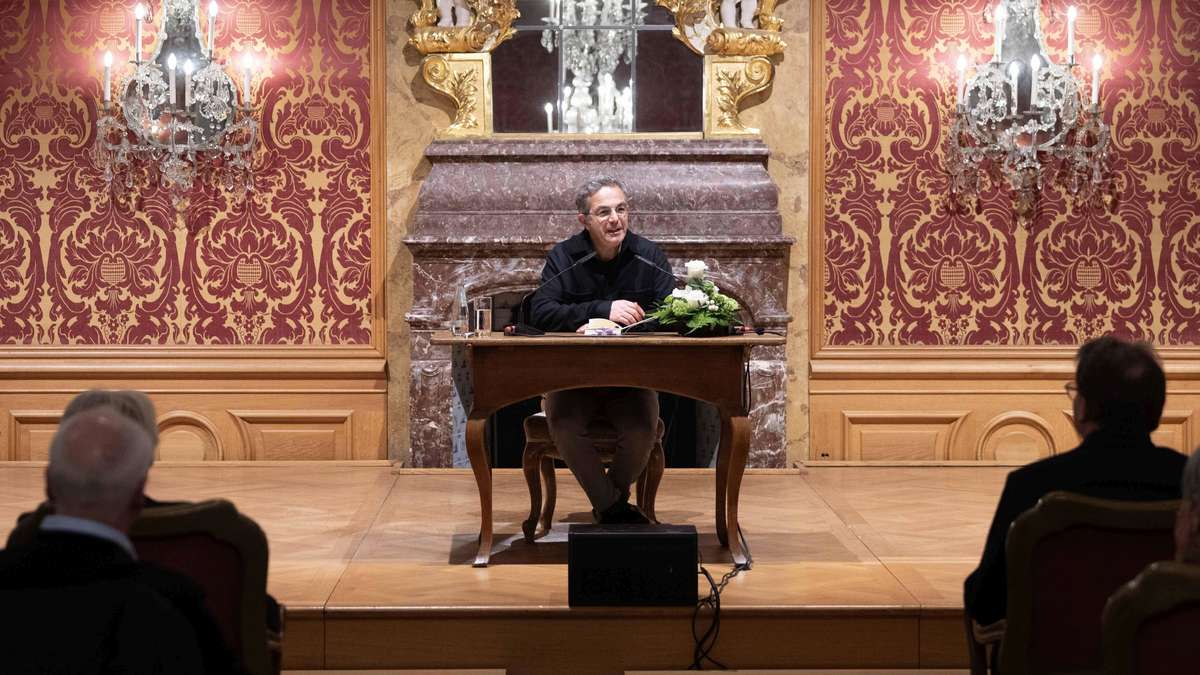

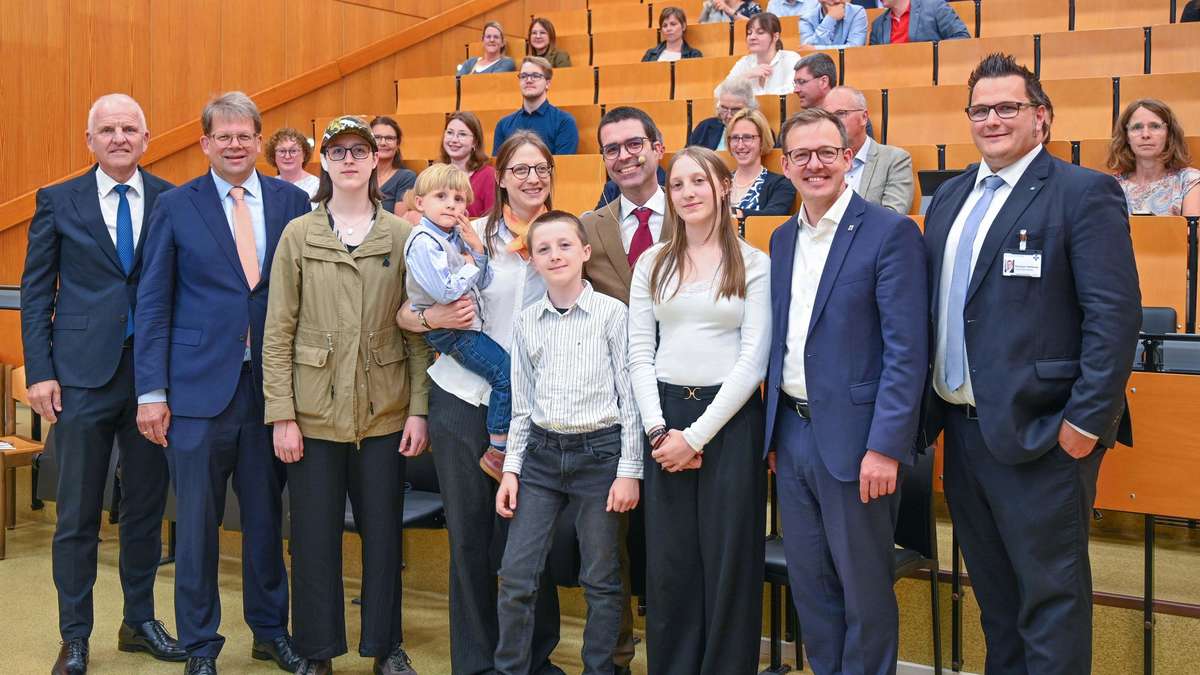
The Fulda Fürstensaal is rarely filled to capacity during a reading. On Wednesday evening it happened again. The Cologne author Navid Kermani opened the 35th round of “Literature in the City Palace”.
Fulda – “A fantastic picture,” cheered Fulda’s mayor Heiko Wingenfeld (CDU) during his welcome, and you could see his joy at the enormous response. Not an empty chair anywhere. The appearance of Navid Kermani at the start of the “Literature in the City Palace” series answered his anxious question as to whether there were still people who were enthusiastic about literature with a clear yes. The guests, including students from the Winfriedschule, also experienced a writer in a great mood who presented his new book “Sommer 24” and was both humorous and thought-provoking.
It was the third official visit to the baroque city of the writer and orientalist, who was honored with the German book trade's Peace Prize, among other things. In 2018, Kermani read as part of the renowned series, and then too the Fürstensaal was bursting at the seams. In 2023 he was presented with the Winfried Prize from the city of Fulda. The award to the “bridge builder” between religions, nations and cultures took place under the impression of the Hamas attack on Israel. “The world hasn’t gotten better since then,” explained Wingenfeld. This makes it all the more important to understand “our contradictory present” and “endure the irreconcilable.”
Large crowd at Navid Kermani's reading in Fulda
“Summer 24” is not a guide with concrete instructions for people who are trying to do just that. But a kind of companion. The author, born in 1967, tells of three “incidents” – actually there are four – that are independent of each other but ultimately intertwined. Kermani revealed the inner structure of this book, which Hanser Verlag described as a “novel,” during the reading; not without a wink. “The narrator has my name, you might think he has something to do with me,” he said.
The first strand winds around the Jewish gallery owner Rudolf Meyer, who is tied to bed after a fall. He, “politically socialized in the student movement at the end of the 1960s,” developed into an AfD sympathizer and decided to commit suicide, contrary to the laws of his faith. “When I arrived, it turned out it was his last day on earth.” The narrator would like to remember him differently…
Olaf, a well-liked school friend with an alternative lifestyle, would have had his daughter's wedding differently too. But Klara wants to experience a dream day that couldn't be more cheesy. On the Greek island of Hydra, all in white, wedding ceremony on the beach, dinner under the stars, “and with the sunrise everyone jumps into the sea”. And while Kermani, the author, does not tell the listeners in Fulda that this wedding in particular will be a magnificent multicultural celebration across all divides and borders, Navid, the narrator, compares father Olaf with father Thomas Mann. Which certainly doesn't bring fame to the Nobel Prize winner for literature.
The writer would later describe this incident as “harmless”; it is compared to what follows. Because it goes to Tigray in Ethiopia, the war reporter visits a hospital ward with a room for premature babies. When faced with a premature baby doomed to die, he thinks of his daughter; she too was born prematurely, but with incomparable life chances. All people are born equal? “That's just not true. … It could be different.” But human work refutes divine justice.
And the last incident, the subliminal fourth, is also something special. The narrator is confronted with Julia, a woman who had told him about her rape many years before. For him, the good listener, this became material for a much-praised story. But the victim accuses him of abusing her a second time. His girlfriend C., who had not yet told him that she too was a victim of male violence, is outraged at first, but then she understands Julia. “Navid, I think you robbed Julia of her story.”
The audience listened to the reader, affected and spellbound. He followed up on Wingenfeld's words. “The image you are giving here should actually no longer exist,” he said, especially with regard to the attentive, young audience. No smartphone was seen.
The queue of those wanting to have one or more books signed was long. The discussions afterwards were lively over a drink, which was offered free of charge thanks to the sponsors, Sparkasse Fulda and Parzellers Buchverlag, as well as the reading.
The next reading will take place on April 15th. Nadine Schneider presents “The Good Life”.