ruth901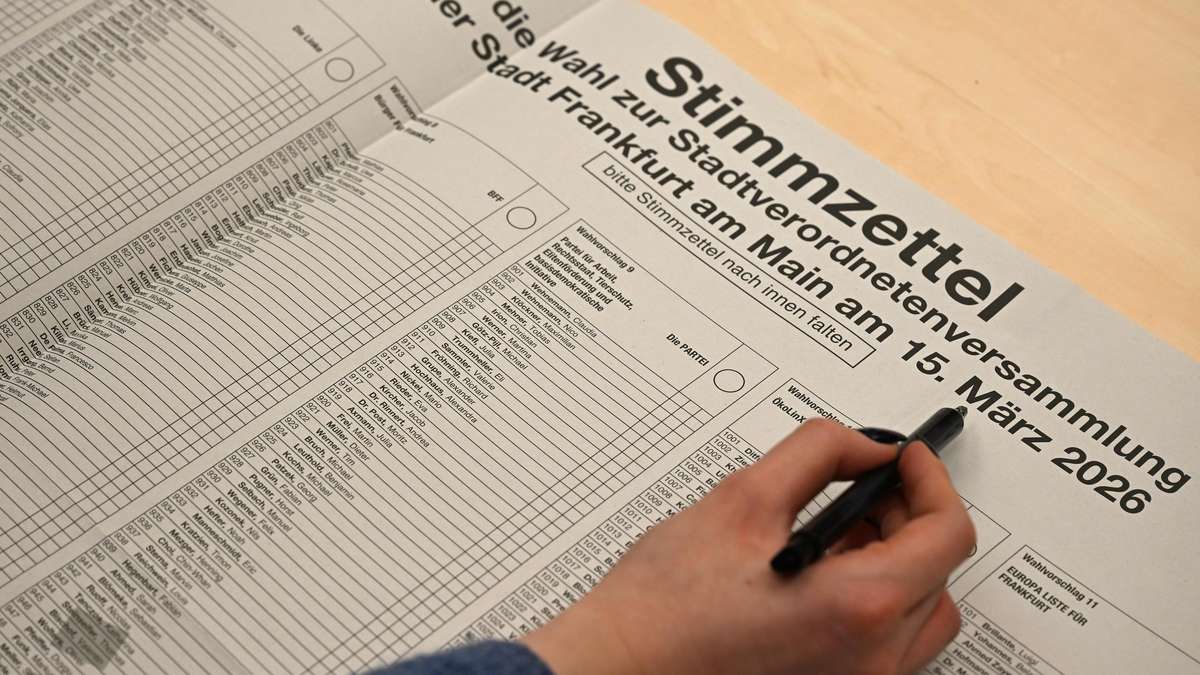
On Sunday, all of Hesse looks at town halls and district councils. The political significance of local elections is great, but the electoral system leaves many people scratching their heads. We clarify.
Fulda – Election Sunday in Hesse: In hundreds of municipalities and 21 districts, citizens decide who will control the fortunes on their doorstep over the next five years. The local elections are about local politics – new cycle paths, the renovation of schools, daycare places and local property taxes. In short: it's about what directly affects our everyday life.

But anyone who enters the polling station on Sunday will be confronted with ballot papers that are sometimes the size of a tablecloth. We'll explain to you how to cast your votes without losing track.
Local elections in Hesse: This is how cumulation and variegation work
Unlike the state or federal elections, you have the Local election not just two voices. The rule of thumb is: you have as many votes as there are seats available. In a small municipality that can be 15 votes, in Frankfurt it is an impressive 93. The City council meeting in Fulda has 59 seats, which means: The voters in Fulda have 59 votes. The exact number is always at the top of the ballot paper.
Now you can tactic – and this is where two important terms come into play: cumulation and variegation. The Hessian electoral system is one of the freest in Germany. You are not bound to rigid party lists, but can virtually “assemble” your dream parliament yourself.
Accumulation (heaping): Do you find a candidate particularly competent? You can then give this person up to three votes. Simply put up to three crosses in the boxes behind the name.
Variety (mixing): You do not have to choose a single party when allocating personal votes. You can freely distribute your votes across candidates from different lists – i.e. “mix”. One cross for the expert from party A, two crosses for the committed neighbor on party B's list.
Polling stations in Hesse are open until 6 p.m. on Sunday
Many voters are afraid of miscounting the many individual votes and awarding too few votes. The list cross helps as a “seat belt” here. If you have given individual votes to specific people, they will be counted first. If you also tick a party or group of voters on the list, the remaining votes that are still missing from the maximum amount will automatically be distributed from top to bottom among candidates on the ticked list.
But you can also make it easy for yourself and just tick one party or group of voters. Then give all your votes to this list using the list cross. A “pro tip”: If you absolutely do not want to see someone on your favorites list in the district council or municipal council, you can simply delete their name. This person will then not receive any of your votes from the list cross.
To ensure that going to the polls in the local elections on March 15th goes smoothly, here are the most important facts:
| Type of choice | Local elections in Hesse |
| Election time | 8 a.m. to 6 p.m |
| Documents | Bring your voting notification and your ID card (or passport). |
| Who can vote? | All Germans and EU citizens who are at least 18 years old and have had their main residence in their Hesse community for three months. |
Polling stations close on Sunday at 6 p.m. Then it is counted. Patience is required. Since counting the variegated ballot papers is extremely time-consuming, in most municipalities on election evening only the trend result is initially shown (the counting of pure list votes).
In many places, the preliminary final result with the exact personnel composition of the district councils, city council assemblies and community representatives will not be known until Monday or Tuesday. We will keep you up to date in our live ticker on Sunday evening – with all the results from your region and the analyzes for all of Hesse.