ruth901
There is a hail of criticism from GermanySwitzerland decides on transit fee! Holidaymakers in transit will soon have to pay
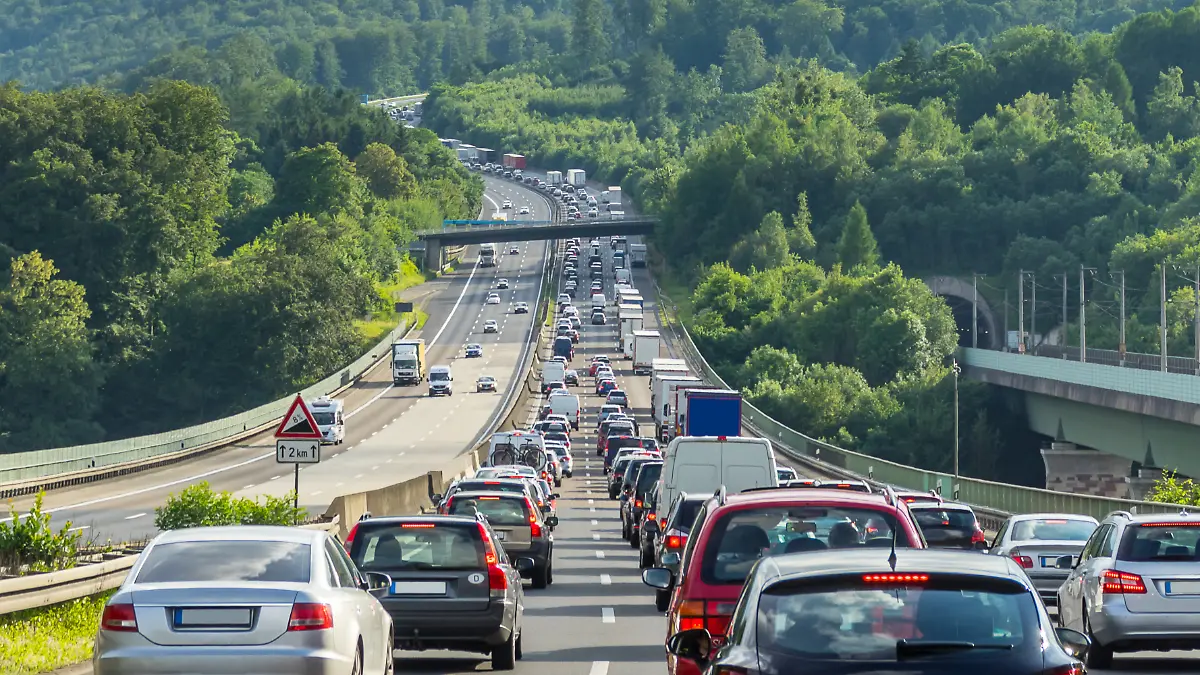
Crowded streets during holidays and weekends – thanks to a new transit fee in Switzerland, this will soon be an end.
TimSiegert batcam – stock.adobe.com
As if the vacation wasn't expensive enough!
For many Germans, the route south is inextricably linked with passing through Switzerland. But that could soon be over – at least for everyone who wants to save! Switzerland is currently planning to introduce a transit fee, i.e. a tax for crossing the country. But how much will the passage cost? And when should the transit fee take effect?
Why does Switzerland want to introduce a transit fee?
Back in March, the Swiss Parliament passed a new transit fee, i.e. a tax for people passing through, as Rundschau-Online reported. The reason for this decision is the overload of traffic routes, environmental pollution and the lack of income from just crossing the country.

The transit fee is intended to put an end to the massive traffic disruptions on holiday weekends and at the beginning and end of the holidays at transit hotspots such as the San Bernardino and Gotthard tunnels. According to the Federal Statistical Office, as the dpa reports, 31 percent of passenger traffic across the Alps is purely transit journeys – an enormous proportion that will now be asked to pay.
Video tip: Going on vacation by car? You need these travel gadgets
Recommendations from our partners
How much should the Swiss transit fee be?
The exact modalities are still being clarified, But an average fee of 21 francs is being discussed, which is around 23 euros. But the passage could become even more expensive depending on the travel time – thanks to a price tier. The transit fee should therefore be higher at peak times to prevent overloading.
This means that Switzerland expects revenue in the lower three-digit million range – a significant improvement when you look at the currently low fee for motorway use in Switzerland.
For comparison: The current annual sticker costs 40 francs (approx. 44 euros), while a daily vignette in Austria costs 9.60 euros and the Brenner toll costs 12.50 euros.
Reading tip: Travel warnings lifted! How safe is vacationing in these countries now?
Introduction: When does the new transit fee apply in Switzerland?
The road to implementation is still rocky: The Swiss government is not very enthusiastic about the parliamentary decision and is unlikely to push for implementation in a timely manner. A referendum could also be necessary, which would also delay the introduction. The introduction of the transit fee is therefore only expected in one or even a few years.
How useful is a Swiss transit fee?
It remains to be seen whether the newly planned transit fee will actually bring about the desired relief on transport routes. According to Thomas Sauter-Servaes, professor of mobility science in Zurich, this is possible in principle, but he doubts whether it makes sense: “If every country thought like that and just wanted to cash in on foreigners, we would have a problem“, explains the mobility expert.
Reading tip: Do you already know the Greek Maldives? Mass tourism has no chance here
Criticism is also already coming from Germany: CDU MEP Andreas Schwab thinks little of the plans and spoke in the dpa interview of “unilateral measures of this kind” that “no step forwardHis party colleague Felix Schreiner also emphasized: “I am convinced that transport policy challenges in the heart of Europe can only be solved together. The right path is therefore not isolation, but more cooperation.”
The Swiss Automobile Club TCS also doubts that the “significant expenditure of resources” for the systematic recording of vehicles would justify the effect of the fee. It therefore remains to be seen whether the Swiss transit fee will actually come.
Sources used: Rundschau onlinedpa