ruth901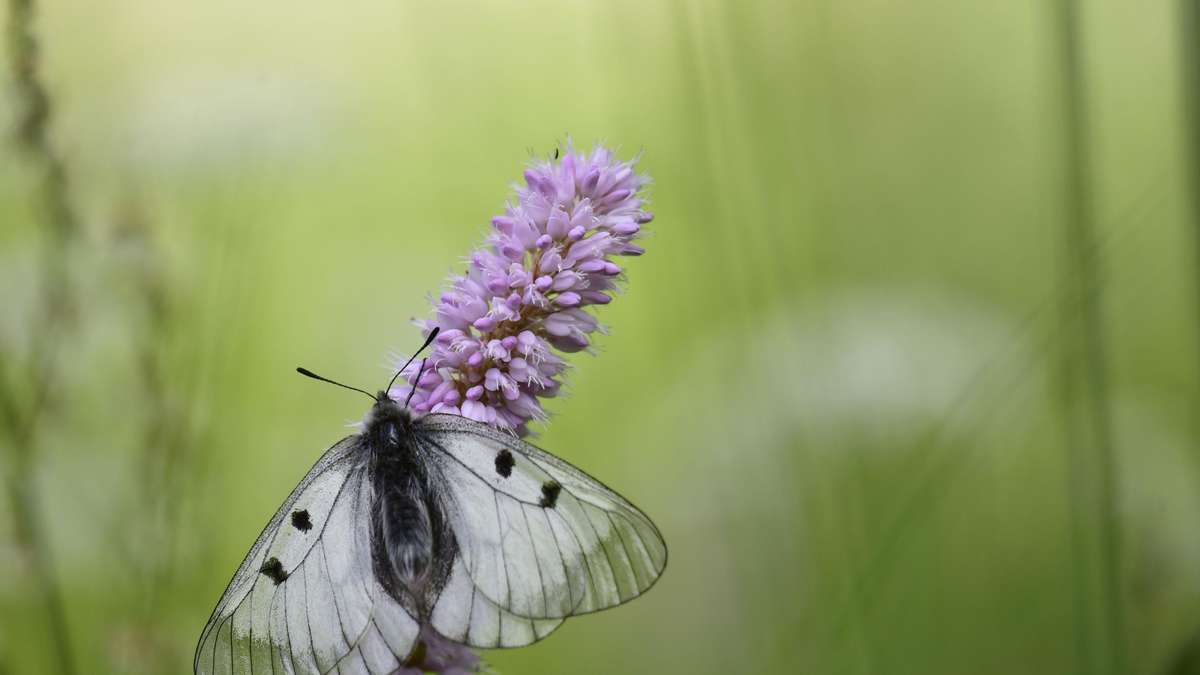

The Rhön is home to many rare species and is considered one of the hotspots of biological diversity in Germany. It also offers important habitat for the rare Black Apollo butterfly species, which only occurs in a few low mountain ranges in Germany and whose population is highly endangered.
Hilders/Oberelsbach – Oberelsbach/Bischofsheim – Protect rare butterflies with a leisurely walk: A citizen science project in the Rhön is once again looking for volunteers to help preserve the critically endangered Black Apollo. On Wednesday, April 1, 2026, those responsible will provide information about goals, procedures and opportunities to get involved at a public information evening.
Volunteers wanted in the Rhön: Hiking for the Black Apollo
Like the Bavarian administrative office UNESCO Rhön Biosphere Reserve and the Rhön Biodiversity Center announce, a citizen science project was started in 2023 to find out where the butterfly still occurs today. In 2023 and 2024, 25 volunteers recorded the food plant of the Apollo caterpillars – certain species of larkspur – in designated areas. Thanks to this commitment, the first protective measures have already been implemented.
Since the black apollo remains critically endangered, the occurrence of larkspur is to be investigated in other areas this year. The aim is to draw conclusions about the possible distribution areas of the butterfly based on the Larkspur occurrences. We are again looking for helpers who are willing to invest around half a day to record data during a walk. According to those responsible for the project, no previous knowledge is necessary – anyone who enjoys being out in nature can take part. Participants stay exclusively on official hiking trails; Leaving the paths is not permitted in the protected areas.
The Black Apollo and the survival significance of the Larkspur
With a wingspan of five to six centimeters, the Black Apollo (Parnassius mnemosyne) is one of the most striking native butterflies. Its white wings with dark spots and an almost translucent front edge make it unmistakable. In Germany the species only occurs in a few low mountain ranges; In Bavaria, outside the Alps, only in the Rhön. As the biosphere reserve explains, the butterfly relies on sun-exposed forest edges and hedgerows with larkspur plants.
A total of three early-flowering larkspur species occur in the Rhön. They are crucial to the survival of the black apollo as the caterpillars feed exclusively on larkspur. The plant is easy to recognize with its purple, sometimes white, flower clusters and fingered leaves. Since only a few other plants bloom so early in the year, the larkspur can hardly be confused with any other plant and is easy to recognize from the path.
In the second step, potentially suitable areas will be specifically searched for the Black Apollo in June. Support from the population is also requested for this. Based on the data collected, the biosphere reserve administration and the Rhön Biodiversity Center want to develop and implement further protective measures together with local nature conservation actors. The aim is to preserve and improve the habitats of the Black Apollo in the Rhön in the long term.
Anyone who would like to get involved can find out more at an information evening on Wednesday, April 1, 2026 at 5 p.m. The meeting point is the hiking car park at the “Thüringer Hütte” (coordinates 50.479386 10.083375). This evening, the ecology of the Black Apollo, the project goals and the exact process of larkspur mapping will be presented. Please register for the information evening by email artmeldeen@reg-ufr.bayern.de.