ruth901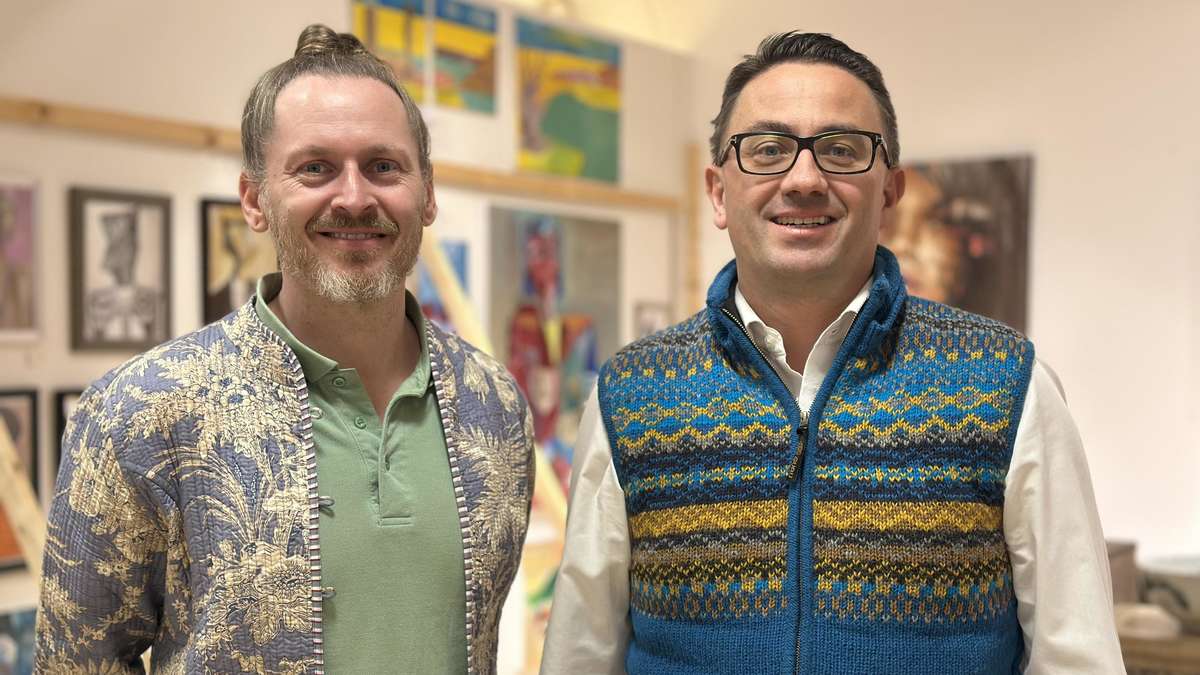

The “Karl Pop-up Store” in Fulda is proving to be a successful model. But the road there was rocky. Now the concept is self-sustaining.
Fulda – From a traditional department store to a creative marketplace in Fulda: The former Kerber building on Rabanusstrasse has reinvented itself. The “Karl Pop-up Store” on the ground floor is now considered a successful model – albeit after several attempts and many a dry spell.
“Karl Pop-up Store” in Fulda: successful model with regional charm
Where families once meandered through the fashion departments, perfume aisles and household goods and where the old escalator hummed quietly, there is now a different kind of activity in the former department store. The former Galeria Kaufhof – remembered by many Fulda residents as Kerber – is now home to the “Karl Pop-up Store”.
More than 40 regional suppliers present their products here. And the concept is now self-sustaining. When Michael Kunze took over the space on the ground floor a year ago, the situation was different. “It was almost empty here back then,” says the entrepreneur from Flieden.
Only 14 providers were involved, and many retailers were disappointed that the project “didn’t go optimally” in the first two years. Today the spaces are fully booked. Handicrafts, vintage products, self-knitted items, paintings, decorative items – the mix is deliberately colorful. The providers rent individual stand space, but do not have to be in the store themselves.

Sales staff take over the cash register, Kunze coordinates the entire project. The rents and commissions that dealers pay are moderate, he emphasizes. Prices start at 75 euros per month. For many small businesses, the store is an important additional source of support. He himself pays a mid-four-figure rent to the city. The rent was reduced until 2025. However, this funding has now expired.
In difficult economic times for the retail sector, this cannot be taken for granted. “People are currently spending their money more on groceries and travel and less on small, nice things,” says Kunze. The positive sales development is all the more pleasing. The concept has been self-sustaining since 2025.
The fact that life is back in the building today was by no means a given after its closure in 2021. The city bought the Kerber area and looked for a new use for the prominent inner city location. Finally, the idea: a “city laboratory”. A place to try out opened in 2023 – with temporary shops, coworking spaces, exhibitions and restaurants. “Karlchen auf dem Dach”, a café location with a special view of the city, opened on the roof.

The Mainz agency “Here & Now” initially started on the ground floor with a concept department store for regional brands and online retailers. The agency was brought in by the urban development company (SEG). But the local network apparently wasn't growing fast enough. The agency did not renew the lease.
This was followed by an attempt by two successors who wanted to establish a real “experience department store”. This chapter was also limited in time. Those responsible for the project continued to look for a sustainable structure – until Kunze finally took over. He says he somehow “stumbled into it.” He had previously offered Far Eastern craftsmanship here himself.
Rental publishing initially runs until the end of 2026
Officially, the “Karl” is still an interim solution. The current rental agreement only runs until the end of 2026. Kunze would like to extend it until 2027. But the whole thing no longer feels like a temporary solution. “This is no longer an experimental field. We are now well positioned,” he says.
What is particularly important is the regionality of the goods. Some Fulda residents also come out of nostalgia – with memories of Kerber's times. Others appreciate the special shopping experience that consciously stands out. Tourists browsed curiously through the offerings.
The store itself still bears traces of the past: some shelves from the old department store are used, which gives the store a slightly improvised charm. In the future, shopfitting should become more modern and uniform. The approximately 50 stands should be designed more clearly. Kunze calls this next stage of development “Karl 4.0”.

In addition to sales, the city focuses on events. Workshops for children, crafts and painting activities are intended to bring additional frequency. “Customers don’t just want to consume, they want to experience something,” says Kunze. Visibility should also increase digitally. The providers want to network more closely.
And the idea may extend beyond Fulda: the concept is already being applied in other cities, the Fliedener reveals. In April, however, the ground floor has to be cleared first. Then the area for the Hesse day (June 12th to 21st). After the major event, the “Karl” should continue again.