ruth901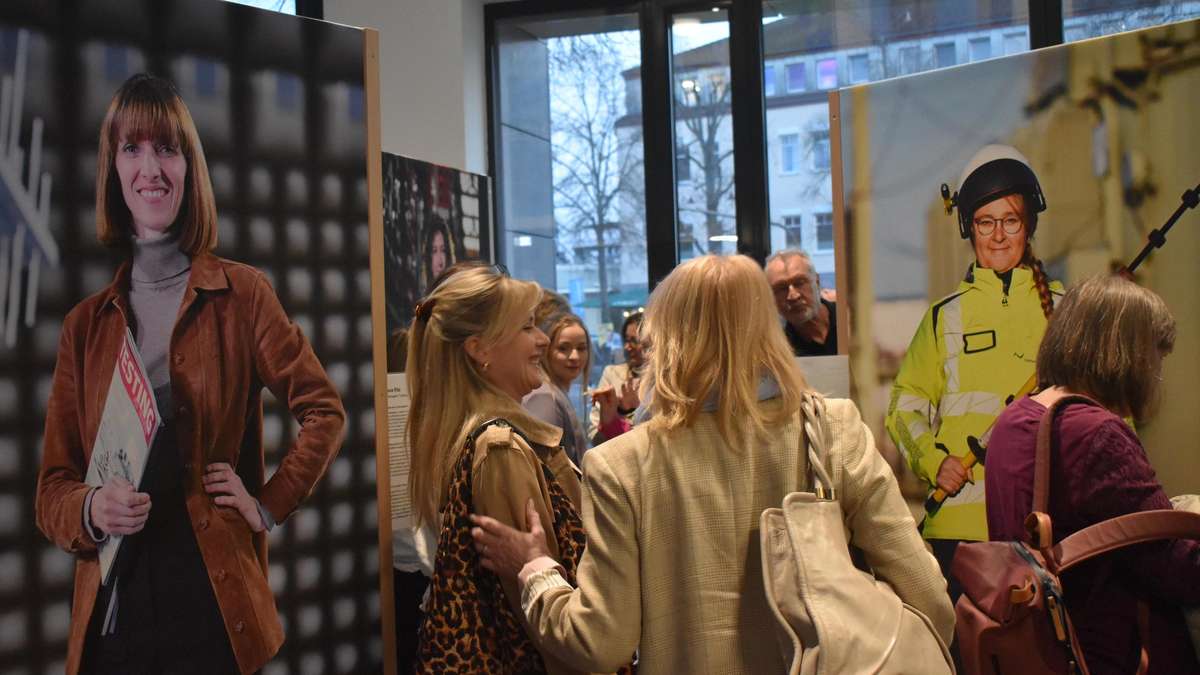

Six companies from the region want to strengthen the visibility of women with a joint photo exhibition. At the opening it was clear that there were still obstacles.
Fulda – The exhibition is an event as part of Fulda Women's Week and is intended to focus on the issue of visibility of women. Twelve employees from six companies were photographed in their work environment by photographer Walter Rammler.
The exhibition shows women in professions in which they are currently underrepresented, explained Martin Heun, spokesman for the management of RhönEnergie, in his welcome address. “Women also need courage to dare to gain a foothold in a male-dominated world.” The participating companies – the engineering service provider EDAG, the technology company JUMO, the Fulda Clinic, the beverage wholesaler Heurich, RhönEnergie and the logistics company Random – want to use the campaign to act as role models for other companies.
New photo exhibition in Fulda shows women in men's jobs
Before the photos were presented, representatives from the six companies discussed the visibility of women in their companies. The different starting positions in the sectors became particularly clear. At the Fulda Clinic, for example, said Professor Dr. Marion Haubitz, women are still underrepresented in leadership positions – despite a growing proportion of female medical students and a 78 percent share of women working in the company. “It won’t move on its own,” she emphasized.
According to human resources manager Alexandra Vogler, the management quota at JUMO has increased from eight to twelve percent in recent years, but women are still rare in technical areas. Several panelists saw a problem with their own confidence: many women underestimated their abilities or allowed themselves to be held back by traditional role models.

Alina Heurich, managing director of the Heurich family business, also made it clear that these role models continue to be effective. A career is often only possible if society and the family support issues such as child care. A spontaneous interjection from the audience – “Fathers!” – underlined this point and reminded that support should not only come from daycare centers and grandparents. Haubitz also referred to the “rush hour of life”, in which care work – unpaid care work predominantly carried out by women – and professional development are difficult to reconcile for many women.
The question of whether women have certain strengths that benefit companies was controversially discussed. While some representatives emphasized communication skills and emotional intelligence, Heurich clearly contradicted this: “We can't do anything better or worse than men.” What is crucial for success in the company is not gender, but rather the diversity in the team.

As the process progressed, possible solutions became the focus. There were reports of the linguistic revision of job advertisements in order to appeal to more women. When it came to the topic of women's quotas, several participants spoke out in favor of seeing them as a necessary starting point to initiate change. Susanne Brune, head of the personnel development department at EDAG, described it as important “start-up funding”.
The large-format photos from the exhibition were unveiled by the photo models present following the discussion. The exhibition can be seen in the RhönEnergie foyer at Löherstrasse 52 in Fulda until March 20th.